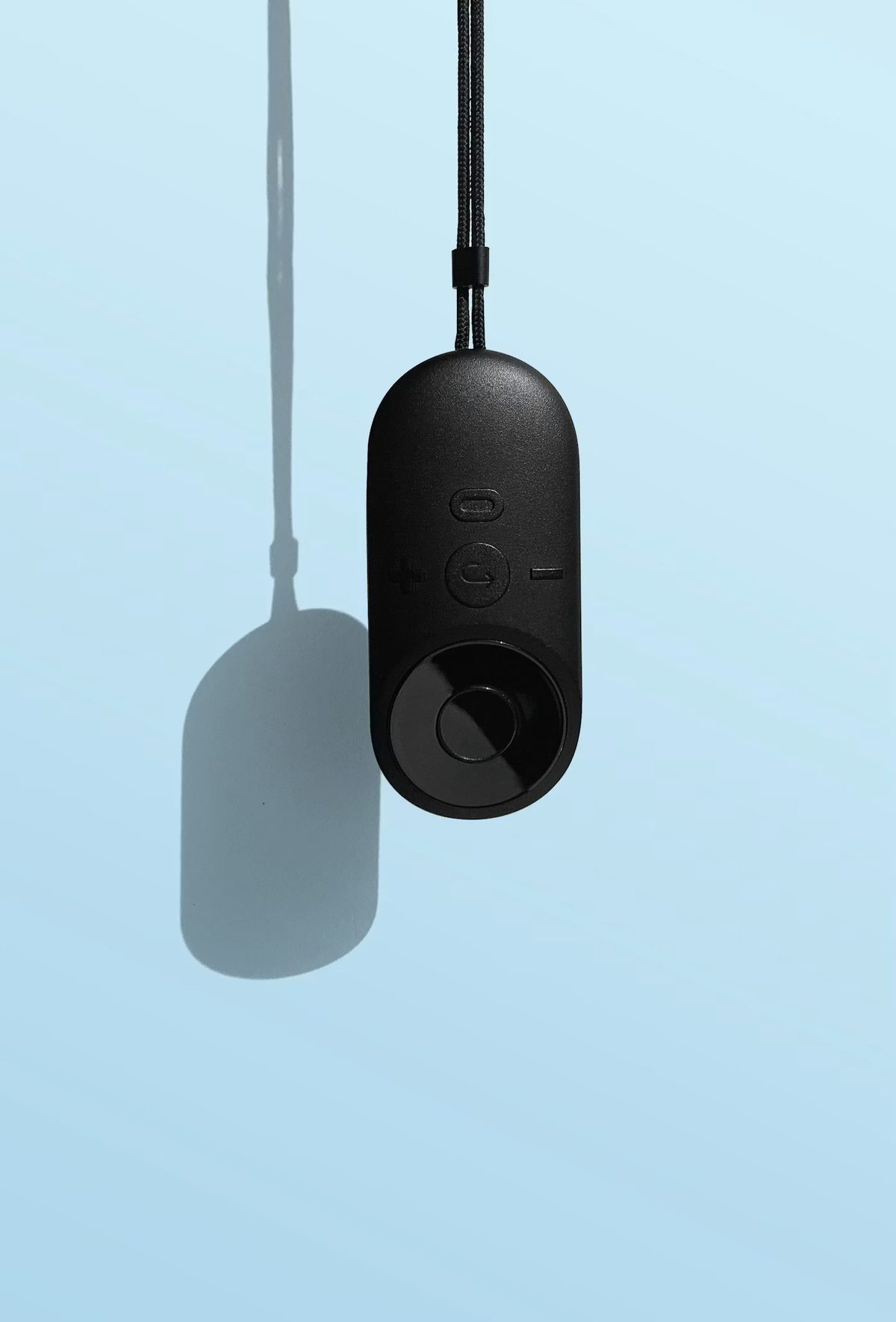
Meta's big reveal this week wasn't a new pair of glasses or a phone. It was a small puck on a cord called Muse Charm — a device with one job, which is letting you talk to Meta's AI agent without opening an app. Zuckerberg called it his "one more thing." My honest reaction, having already worn something almost exactly like this, is that I'm not buying one, and I don't think most people should either.
I want to be fair about this before I get to the complaints, because it's easy to dunk on a product from a keynote slide. Muse Charm isn't a gimmick built by nobody — it's got a fingerprint sensor, a small OLED display that shows an animated character, and it's designed to be worn on a keychain or around your neck so the AI agent is a tap away instead of three taps deep in an app. Meta is aiming for a December launch. It's a real product, built by a company that can actually ship hardware at scale. None of that is the problem.
I've already run this experiment
Earlier this year I wore an AI pendant that transcribed my whole day for 30 days, and the honest verdict wasn't that the technology failed — it worked roughly as advertised. The problem was everything around the technology. It was one more thing to charge every night alongside my watch, my phone and my earbuds. It was one more thing to remember to actually wear, which meant on the mornings I forgot it, the entire premise of the device quietly stopped working and I didn't notice until the evening. And it was one more thing I had to check afterwards to see whether it had actually captured anything worth having.
Muse Charm solves a different problem than that pendant did — it's built for quick voice queries to an AI agent, not continuous transcription — but the shape of the daily cost is identical. Any device that lives on your body and does one narrow job is competing with a phone that already does that job adequately, sitting in a pocket you were going to carry anyway.
The part that doesn't show up in a keynote demo
What a launch announcement never has time for is the six weeks after you buy the thing, when the novelty wears off and it becomes a genuine daily decision: do I put this on today. My kitchen drawer has more of those decisions in it than I'd like to admit — a fitness tracker I wore for a fortnight, a pair of earbuds I bought for a trip and never repacked. A device only earns a permanent place on your body by removing a decision you were actually making, not by adding a new one dressed up as convenience.
There's also the question of what's actually listening. A device built to respond to your voice on demand needs some level of always-ready microphone access, and Meta hasn't published the technical detail that would tell me exactly how that's handled on-device versus in the cloud. That's not an accusation — it's an honest "I don't know yet," and I'd rather wait for the privacy documentation and a few independent teardowns than take a keynote's word for it. I went through a version of this same reckoning when I turned off Meta AI in every app that kept quietly offering it to me: the issue was never that the assistant answered badly, it was that I hadn't actually chosen to let it in.
Where I'd change my mind: a genuinely hands-free use case a phone handles badly — voice notes while cycling, quick translation while travelling, something where reaching for a phone is the actual friction, not the touchscreen itself. Muse Charm might nail one of those. I just don't think "an AI agent, on a keychain, for general use" is that case for most people, including me.
Samsung wasn't the exception, it's the pattern
This is the third major AI wearable launch in a few months I've watched from the sidelines rather than the pre-order queue. Samsung's Gemini-powered Galaxy Glasses landed with the same pitch — always-available AI, hands-free, one tap away — and my honest reaction there was the same as it is here: impressive engineering, unclear daily need. Three separate companies converging on "put the AI agent on your body" in the same year isn't proof that it's the right idea. It's just proof that every major tech company currently believes the next platform has to be wearable, and they're all racing to plant a flag before anyone's actually confirmed people want one.
I'm not against AI running quietly in the background of my life — I spent 30 days letting an AI plan my meals and kept using parts of it afterwards, because it removed a decision I was making badly anyway. That's the bar. Not "does this technology work," but "does this specific object, on my specific body, replace a specific daily friction." A meal-planning app clears that bar from inside an app I already open. A keychain pendant that needs its own charge cycle and its own habit of remembering to wear it does not, not yet, not for me.
What I'm actually watching for
None of this is a verdict on AI agents generally — I think Meta's Muse assistant, and the broader idea of an AI you can talk to without unlocking a screen, is a real direction and not a fad. What I'm sceptical of is specifically the hardware answer: a new object, a new battery, a new habit, bolted onto a problem my phone already solves adequately for free. If Muse Charm ships in December and reviewers find the always-on voice access genuinely changes how often people reach for help, I'll say so honestly, the same way I've changed my mind on gear before. Until then it's staying off my keychain, and if you're weighing up whether any AI wearable is worth the daily overhead, my AI tools hub has the honest verdicts on the ones I've actually tested rather than just announced.
Meta isn't the only one betting on "one agent for everything" right now — it's just doing it in hardware. Google has reportedly made the same bet in software, retiring the tool that let people build narrow, task-specific agents in favour of one assistant that's meant to do it all. Same instinct, different form factor, and I'm just as unconvinced by it there.
If you want the next reaction piece before it goes anywhere else, join the newsletter — I'll be back on this the day Meta actually ships hardware instead of a keynote slide.
Questions people actually ask
What is Meta's Muse Charm?
Muse Charm is a small keychain-sized device Meta unveiled to carry its Muse AI agent with you without opening an app. It has a fingerprint sensor to wake it, a small display that shows an animated Muse character, and it's built to be spoken to directly rather than typed into. Meta says it's aiming for a December launch.
Is Muse Charm the same thing as the Ray-Ban Display glasses?
No, they're separate products announced around the same time. The Ray-Ban Display glasses put a screen in the lens for notifications and navigation. Muse Charm is a standalone pendant with no glasses attached, built purely as a pocket-or-keychain way to talk to Meta's AI agent.
Do I actually need an AI wearable device?
For most people, no — the phone already sitting in your pocket does almost everything a standalone AI wearable promises, and it doesn't need its own charger or its own battery anxiety. The exception is a genuinely narrow use case a phone handles badly, like continuous hands-free transcription, where a dedicated device can earn its place.
What happened when I tried an AI pendant before?
I wore one that transcribed my day for 30 days, and the honest verdict was that it added a genuine daily chore — charging it, remembering to wear it, checking whether it had actually captured anything useful — for benefits I could get most of another way. That experience is a big part of why a second wearable AI device doesn't automatically get the benefit of the doubt from me now.
Is it safe to wear a device that's always listening for an AI agent?
That depends entirely on how the manufacturer implements wake-word detection, on-device processing and data retention, and those details are rarely settled at announcement stage. My own rule is to wait for the privacy policy and a few independent teardowns before trusting an always-on microphone on my body, not the marketing copy from the keynote.