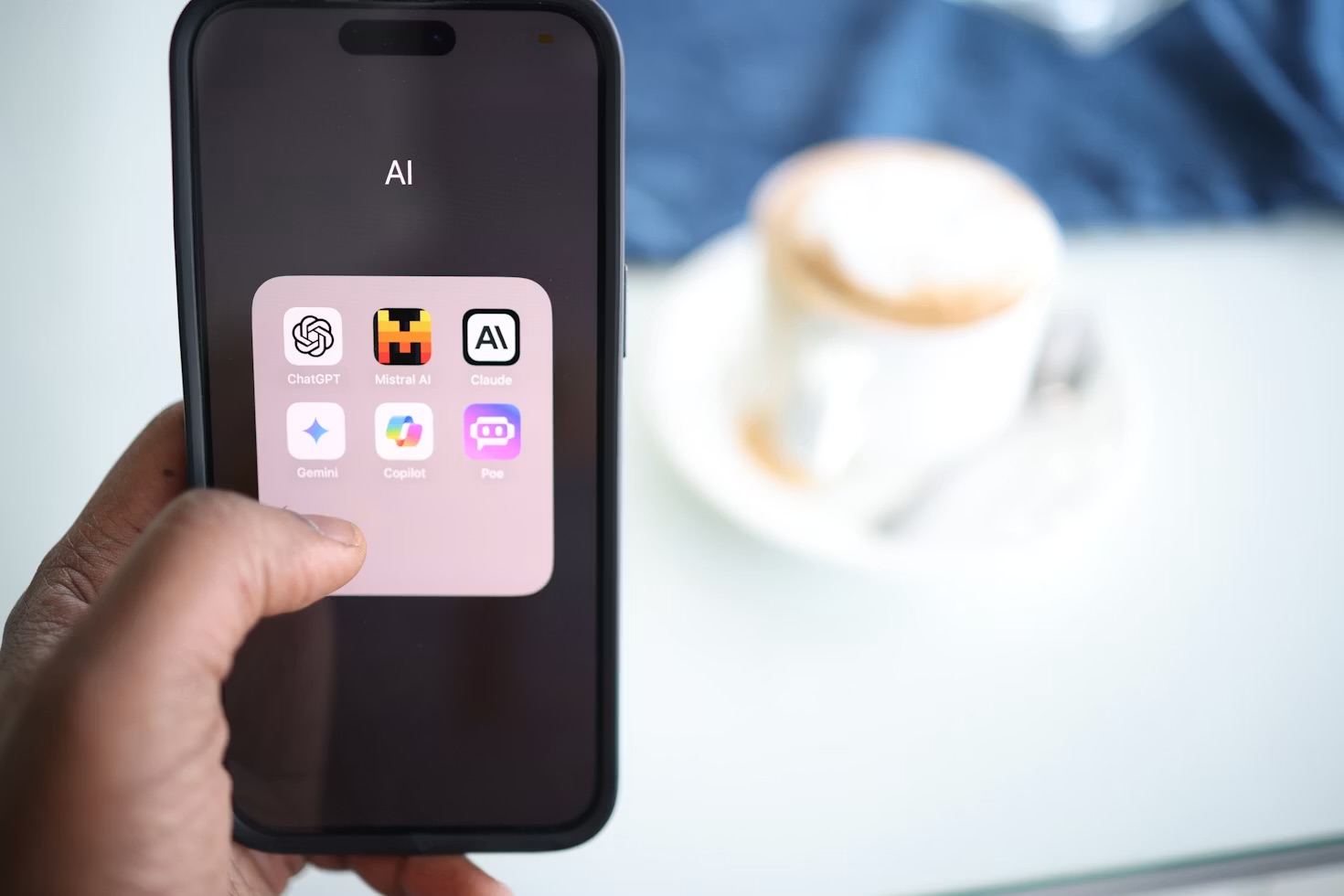
I didn't decide to stop using Google. There was no dramatic switch, no manifesto. One day a few months ago I noticed I'd gone a full working day without typing anything into a Google search bar — and yet I'd looked things up constantly. It had all gone through Perplexity instead. This is the honest, unglamorous account of how that actually happened, what a normal day of it looks like, and the handful of times I still reach for plain old Google.
Let me be clear about what Perplexity is before I gush, because the marketing muddies it. It's an AI-powered answer engine: you ask a question in plain English, it searches the live web, reads the results, and hands you a short synthesised answer with numbered citations you can click to check. Not a chatbot spinning answers from memory, and not a list of ten blue links either — something in between, closer to a research assistant that shows its working. That last part, the citations, is the whole reason I trust it enough to have quietly changed a fifteen-year habit.
The moment it stopped feeling like a novelty
I've tried plenty of "Google killers" over the years and abandoned every one within a week. What made this different wasn't a feature, it was a small daily friction disappearing. The old routine for any real question — say, "what's the actual difference between OLED and QD-OLED for a bright room" — was: Google it, open four tabs, skim past the affiliate padding in each, mentally stitch together the bits that agreed, close the tabs. Perplexity collapses that into one screen: a three-paragraph answer that already did the stitching, with a footnote on each claim so I can jump to the source if something smells off. The first time I did that and thought "well, that was the whole task, done," was the moment it stopped being a novelty.
Crucially I don't take the answer on faith. The citations are there precisely so I don't have to — I click through on anything that matters, exactly as I would have opened those four tabs, except now I'm opening the two that are actually relevant instead of guessing. It turned searching from a scavenger hunt into a review.
What a normal day of it actually looks like
My morning catch-up is the clearest example. Instead of doom-scrolling a news site, I ask something like "what happened in consumer tech this week that's actually worth knowing about" and get a tidy, sourced briefing I can expand on whatever catches my eye. It's the same instinct that makes a good research tool valuable — I lean on the same approach when I'm going deep on one subject, which is where a dedicated setup like a personal research assistant built with NotebookLM earns its place. Perplexity is the wide, shallow, all-day tool; NotebookLM is the deep-on-one-thing tool. I use both, for different jobs.
Through the working day it's the constant background utility. "How do I phrase this in French," "is this WordPress plugin still maintained," "what's a fair freelance day rate for X in 2026," "explain this tax term like I'm not an accountant." None of these are things I want a full-blown chat conversation for — I want a fast, cited answer and then to get on with my life. That's the sweet spot: questions too involved for a snippet but too trivial to babysit a chatbot through — and, importantly, none of them are jobs where the words have to be mine, which is exactly why I draw a hard line and still write my own emails by hand. This sits alongside the other AI habits I've built up; if you're just getting started with any of this, my honest take on the ground floor is still the beginner's ChatGPT playbook, and Perplexity slots in neatly beside it rather than replacing it. It's also a neat example of the point I make in why AI only made me more productive once I stopped using it everywhere — it earns its place precisely because it does one bounded job well.
"Google gives you somewhere to start looking. Perplexity gives you something to check. Once I noticed that difference, I couldn't unsee which one I actually wanted most of the day."
The setting that made it automatic
The switch only truly stuck once I made it the path of least resistance. I set Perplexity as the default search engine in my browser, so anything I type into the address bar goes there first. That one change did more than any amount of good intentions — because the whole reason Google won for so long is that it was the thing already sitting under my cursor. Give a new tool the same privileged position and, within about a week, reaching for it stops being a choice and becomes the reflex. If you want to trial it without committing, keep Google as a keyword shortcut so you can still fire a query at it in two keystrokes when you want to. I did exactly that, and watched how rarely I used the escape hatch. I've since taken that same instinct a step further and switched my main browser to Perplexity's own Comet, which was the easiest of the three AI browsers I actually kept using to adopt, mostly because it's the same habit I'd already built, just one layer deeper.
I also stopped treating it as something separate from the rest of my tooling. It lives in the same mental drawer as the practical AI tools I actually use week to week — not a shiny thing I open deliberately, just another quiet utility that's always there. In fact it's earned a permanent spot among the free AI tools I open every week that aren't ChatGPT. That's the real test of whether a tool has landed: you stop thinking about it as a tool at all.
Where I still open Google — and why that's fine
This is the part the breathless "I ditched Google forever" posts skip. I haven't ditched Google. I still open it several times a day, and each time it's for the same short list of things Perplexity is simply worse at. When I want to navigate — reach a specific company's website, a login page, a known destination — Google is faster; I don't want an essay, I want the door. Local search ("best-rated tyre place near me, open now"), shopping when I want to compare live prices and buy, and image search all still go to Google, because those are jobs a synthesised paragraph makes slower, not faster.
So the honest split isn't "Perplexity replaced Google." It's that I finally have two tools instead of one overloaded one, and I've learned which question belongs to which. Roughly: if I'm trying to understand something, Perplexity; if I'm trying to get somewhere or buy something, Google. Framed that way, they barely compete — they just used to share a search box. There is a third category neither one owns, mind: anything that needs verifying rather than synthesising. I learned that the expensive way when I spent 30 days using AI to trace my family tree and it handed me confident, fluent, entirely invented ancestors.
The honest verdict: Perplexity hasn't killed Google for me, but it has quietly taken over the eighty per cent of searches that were really research in disguise. The cited, synthesised answer is the feature that changed the habit, and setting it as my default search engine is what made the change stick. If you try one thing, try that — make it the thing under your cursor for a week and see how often you miss the old way.
Is it worth paying for?
Not at first, and maybe not ever, depending on how you use it. I ran the free tier for weeks — unlimited standard searches plus a small daily allowance of the more powerful "Pro" searches — and it comfortably covered a normal day. I only moved to Pro once I started leaning on the heavier reasoning models and uploading documents to ask questions of them, which is a different, more demanding use than quick daily lookups. If you're just replacing your everyday searching, the free version is genuinely enough, and I'd start there before spending a penny.
If you want the next honest tool review before it goes live, join the Brite newsletter — no hype, just what's actually earned a place in my week.
Perplexity earned its place by doing one job better than the generalists. Whether the generalists themselves are still interchangeable is a separate question, and the Gemini and ChatGPT comparison is where I tried to settle it.
Sourced answers are exactly what you want when a plan depends on facts that change, such as opening times and ferry timetables. I use Perplexity for that checking step in my guide to planning a trip with AI.
Questions people actually ask
Is Perplexity AI better than Google?
For research — anything where you want an answer synthesised from several sources with citations — Perplexity is genuinely better than scrolling Google's results. For navigation, local search, shopping and images, plain Google is still faster. I use Perplexity when I want to understand something and Google when I just want to get somewhere.
Is Perplexity AI free to use?
Yes. The free tier gives you unlimited standard searches plus a handful of more powerful Pro searches each day, which is more than enough for most people. Pro, at around twenty pounds a month, unlocks the stronger underlying models and unlimited file uploads. I ran the free tier for weeks before it was ever worth paying.
Can Perplexity AI replace Google search?
For me it has replaced perhaps eighty per cent of what I used Google for — every "how does X work", "what's the difference between", and "catch me up on" query now goes to Perplexity. The remaining twenty per cent, where I want a specific website, a shop, a map or an image, still goes to Google. It replaces a habit, not the whole search box.
What is Perplexity AI best for?
Fast research with sources you can click and check. It shines when the answer lives across five articles you'd otherwise have to open in five tabs — it reads them, summarises the point, and footnotes every claim so you can verify it. That verifiable, cited answer is the single feature that made me stop reaching for Google first.