Generative AI is the kind of AI that makes new things, such as a paragraph, a picture or a piece of code, from a request typed in ordinary language. Here's what it is, how it works without the maths, what it gets wrong, and a short glossary of the words you'll keep running into.
What does generative AI mean?
The UK government's AI Playbook puts it in one line: "Generative AI is a subset of AI capable of generating text, images, video or other forms of output." The word that matters is generating. Older AI mostly sorted, predicted or recommended: it flagged spam, suggested the next film, estimated a delivery time. Generative AI produces something that didn't exist a moment ago.
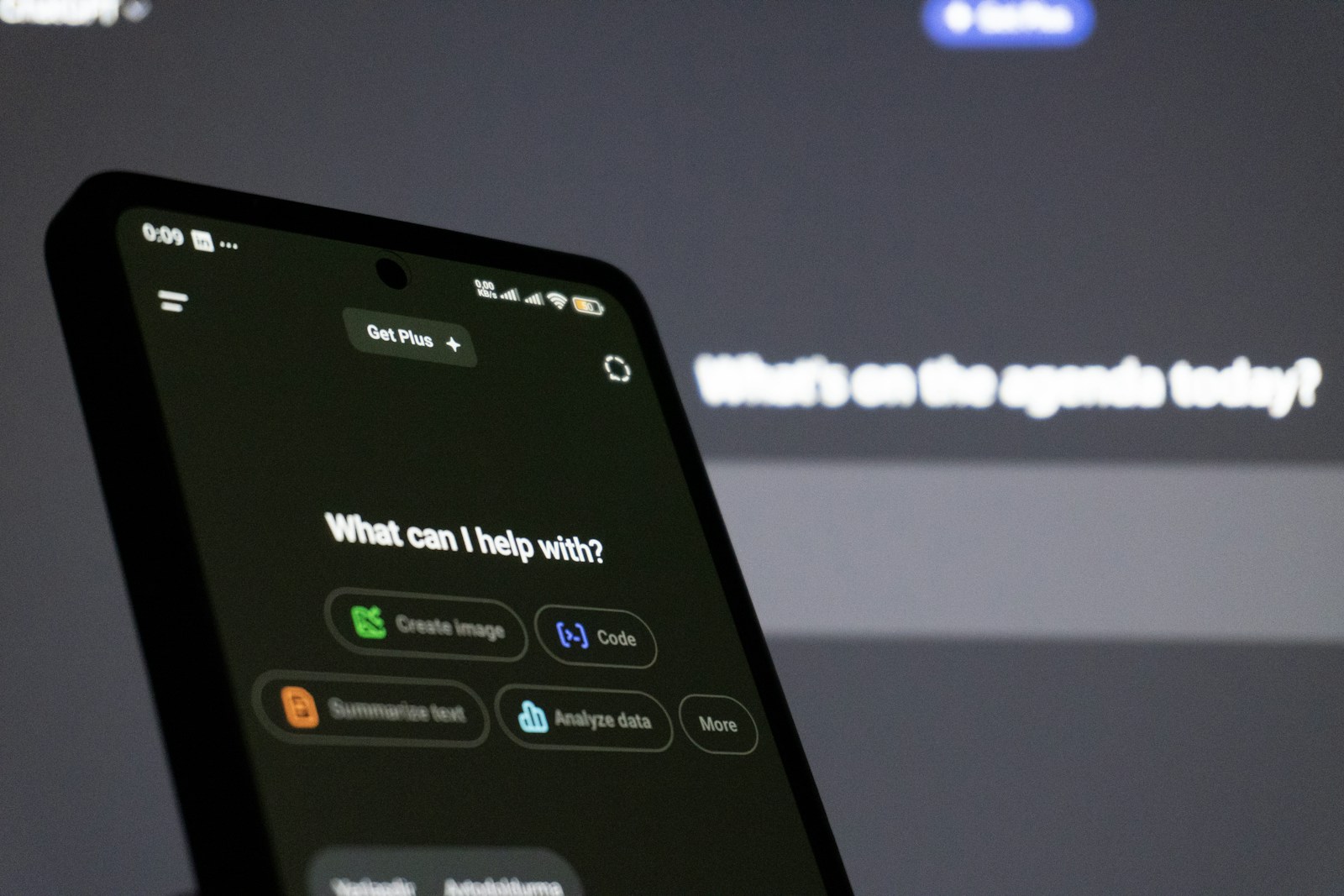
You've probably used it already. ChatGPT, Google Gemini, Microsoft Copilot and Claude are all generative AI tools. So is the feature in a photo app that removes a stranger from your holiday picture and fills in the background.
How does generative AI work?
The text tools are built on large language models, which the Playbook describes as "large neural networks specifically trained on text and natural language data". In plain English:
- Training. The model is shown a vast amount of writing and learns the patterns in it: which words tend to follow which, how questions are usually answered, what a recipe or a cover letter looks like.
- Your prompt. You type a request. That request is called a prompt.
- Prediction. The model works out, piece by piece, what is most likely to come next given your prompt and everything it learned, and builds an answer one small chunk at a time.
That's why it can write fluently about almost anything, and also why it can be wrong. It's producing a likely-sounding answer, not looking one up in a book of facts. Image tools work on a similar principle with pictures instead of words.
What generative AI is good at
- First drafts: emails, letters, social posts, a speech outline.
- Explaining: a confusing letter, a technical term, a topic you're new to, at whatever level you ask for.
- Summarising: a long document or article into the points that matter.
- Brainstorming: names, gift ideas, ways to tackle a problem.
- Rewriting: making something shorter, friendlier or more formal.
Its limits, and why they matter
The government's Playbook lists the main weaknesses, and they're worth knowing before you rely on an answer:
- Hallucination. It can produce content that "appears plausible but may actually be factually incorrect". A made-up statistic or a quote nobody said can look completely convincing.
- No judgement or experience. It lacks "critical thinking, personal experience and judgement". It can describe a decision but not take responsibility for one.
- Not an expert. It isn't a substitute for a doctor, solicitor or financial adviser.
- Not always current. Some tools don't have live access to the internet, so recent events may be missing or out of date.
The practical rule: use it to get started and to understand, then check anything that matters against a trusted source.
A short generative AI glossary
These are the terms that come up most often, in the sense you'll meet them in everyday AI tools.
- AI (artificial intelligence): software that performs tasks we'd normally think need human intelligence, such as understanding language or recognising images.
- Machine learning: the branch of AI that learns patterns from data rather than following hand-written rules.
- Large language model (LLM): the type of model behind AI chat tools, trained on huge amounts of text.
- Model: the trained system itself. AI companies release new models from time to time, and the app you use may let you pick one.
- Chatbot or AI assistant: the app you type into, such as ChatGPT or Gemini.
- Prompt: what you type or say to the AI. Better prompts get better answers, and there's a whole guide on how to write AI prompts that actually work.
- Hallucination: a confident answer that's wrong or invented.
- Training data: the material a model learned from.
- Context window: how much the AI can keep in mind at once in a conversation, including what you've pasted in. Free plans usually allow less than paid ones.
- Multimodal: able to work with more than one kind of input, such as text, photos and voice.
- AI agent: AI that takes actions to complete a task, not just answers. What is an AI agent? explains how they work.
Starting out, whatever your age
Plenty of people come to AI later than their children or grandchildren did, and that's no disadvantage. You don't need any technical background, and you can't break anything by asking a question. The easiest first step is the phone already in your pocket: how to use AI on your phone for free shows you how to set one up in about 20 minutes. Then the ChatGPT for beginners playbook takes you through the first real tasks.
If you'd like a structured path, Your First 30 Days With AI is an eight-module course written for people new to AI on their phone or laptop, and the first two modules are free.
Want more plain-English AI guides? I send one practical guide a week to my newsletter. Sign up here and I'll send the next one straight to your inbox.
Questions people actually ask
What is generative AI in simple terms?
It's AI that creates new content, such as text, images, audio or code, from a request written in everyday language. ChatGPT, Gemini, Copilot and Claude are all examples.
How does generative AI work?
A model is trained on a huge amount of material and learns its patterns. When you type a prompt, it predicts what is most likely to come next and builds an answer piece by piece. It's producing a likely answer, not looking one up, which is why it can sometimes be wrong.
Is ChatGPT generative AI?
Yes. ChatGPT is a generative AI tool built on large language models, and it can also create images. Google Gemini, Microsoft Copilot and Claude are generative AI tools too.
What is an AI hallucination?
It's when an AI tool gives an answer that sounds convincing but is wrong or made up, such as an invented fact, figure or quote. Check anything important against a trusted source.
What is the difference between AI and generative AI?
AI is the broad field. Generative AI is one part of it, the part that creates new content. Other kinds of AI sort, predict or recommend, such as a spam filter or a film recommendation.
Sources
- Artificial Intelligence Playbook for the UK Government (GOV.UK)
- What are AI agents? (Google Cloud)