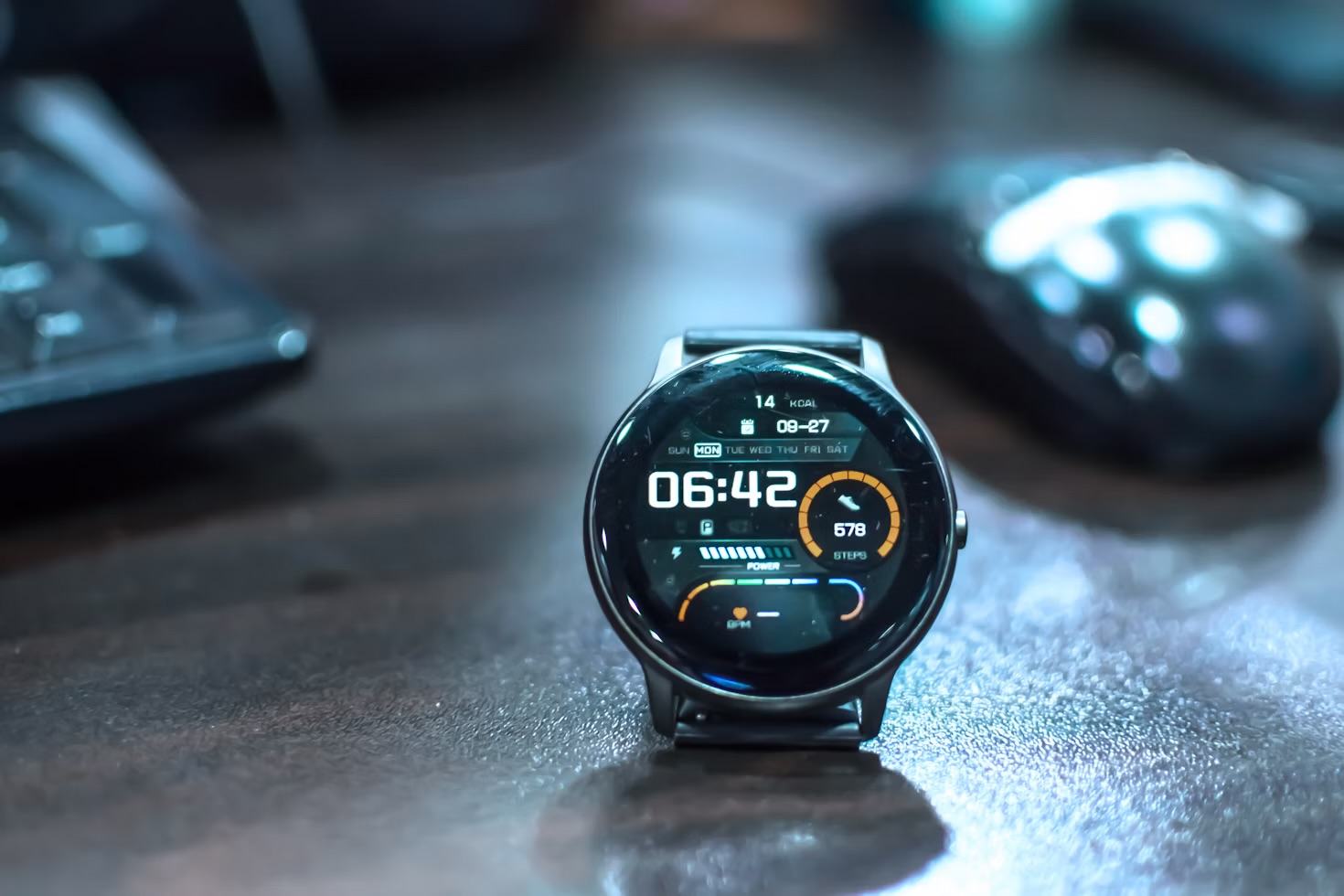
Every time I finish a strength session, my watch tells me exactly how many calories I burned. For over a year I believed that number the way I'd believe a set of kitchen scales — precise, dependable, worth building a decision around. Then I actually tested it against something more rigorous than my own wrist, and the number I'd been trusting fell apart almost immediately.
It started with a small nagging doubt rather than any grand plan to investigate. My watch would tell me a 45-minute weights session had burned 600-plus calories — more than some of my longer, harder runs — and that never quite squared with how I actually felt afterwards. Runs left me depleted. Weights left me tired in my muscles but not remotely as drained. I'd been quietly adjusting what I ate on lifting days based on a figure that, it turns out, I'd never once checked.
What I actually did to test it
I picked four strength sessions over two weeks — the same rough structure each time: compound lifts, working sets, a couple of minutes' rest between them — and wore my watch as normal. But alongside it, I paired a Bluetooth chest strap heart rate monitor to a separate fitness app for the same sessions, so I had two independent readings of the same workout rather than just one number to take on faith.
I wasn't trying to prove the watch wrong going in. I genuinely expected the two numbers to land close together, maybe 10 or 15 percent apart at most. That's not what happened.
What the numbers actually said
Across the four sessions, my watch consistently reported the higher figure — sometimes by a lot. My worst gap was a session the watch scored at 640 calories against 410 from the chest-strap-fed estimate for the identical workout. My best gap was still around 20 percent apart. Not one of the four sessions came back close.
I don't have a metabolic cart in my spare room, so I can't tell you which number was the "true" figure, and neither reading is gospel. But a chest strap reads your heart's electrical signal directly rather than inferring it from blood flow under the skin, which makes it a meaningfully better input into the same calorie formula — and it agreed with itself far more consistently than my watch did session to session. That gap was interesting enough that I went back and tested the heart rate number on its own against the same chest strap, isolated from the calorie maths — and it drifted the same way, for the same reason.
The number that made me stop guessing: a widely reported 2026 study out of Florida International University put 58 adults through a controlled workout on exercise bikes while wearing four popular smartwatches, then compared the results against a lab-grade metabolic analyzer — the actual gold standard for measuring energy expenditure. Every watch overestimated calories burned, by 15 to 25 percent on average, and the error grew larger the higher a person's body fat percentage. That study tested cycling, not weights, so it isn't a direct match for what I was doing — but it's independent confirmation that the overestimation I found isn't a fluke of my own watch or my own workouts.
Why weights make this worse than cardio
Wrist-based optical sensors were built and calibrated around steady, repetitive movement — walking, running, cycling — where your arm swings in a predictable rhythm and your heart rate rises and holds in a fairly stable band. A strength session is close to the opposite of that. Gripping a bar or a dumbbell restricts blood flow right where the sensor is trying to read it, and the stop-start pattern of a heavy set followed by two minutes of standing around confuses an algorithm that expects continuous effort. I'd been treating my watch as equally trustworthy across every kind of exercise, when the case for trusting it was never remotely equal to begin with.
It's the same lesson, in a different shape, to the one I ran into when I stopped chasing my watch's VO2 max score — a single number presented with total confidence, built on assumptions about my body that the device has no real way of checking. And it's not just wrist wearables on humans that do this. When I clipped a GPS tracker onto my dog's collar for a week, the activity readout was confident and specific and also, on a couple of days, plainly wrong about what she'd actually been doing. A device that presents a number cleanly isn't the same thing as a device that's measured it accurately.
What I actually track now
I haven't switched off calorie tracking, but I've stopped treating the figure as real. On lifting days I now discount whatever my watch reports by roughly a quarter before it factors into anything, and I use the number to compare my own sessions against each other rather than as something to bank against what I eat. What I actually pay attention to now is total tonnage — weight times reps times sets — because it's the one figure in the whole workout that isn't an estimate. It's just arithmetic on what I actually lifted, and it's told me more about whether I'm progressing than a calorie count ever did.
If you want to get more out of whatever's already on your wrist rather than buying anything new, I put together a full guide to actually using your wearable data that covers this same instinct — question the number before you build a habit around it. And if strength training specifically is new territory for you, it's worth reading alongside everything else I've tested on this wrist before you decide which numbers are worth trusting and which ones are just confident-looking guesses.
The honest verdict: my watch isn't lying to me on purpose, and it isn't useless — it's just answering a question it was never built to answer precisely for this particular activity. For steady cardio, treat the number as a reasonable estimate. For weights, treat it as a rough guess dressed up as a precise one, and discount it accordingly.
Questions people actually ask
Are smartwatch calorie counts accurate?
Not reliably, and the gap is bigger than most people assume. A widely covered 2026 Florida International University study tested four popular watches against lab-grade metabolic equipment and found every one of them overestimated calories burned, by 15 to 25 percent on average, with the error growing larger for people with higher body fat percentages.
Why are calorie estimates worse for weight training than cardio?
Wrist-based optical sensors are built around steady, repetitive motion, which is exactly what strength training isn't. Gripping a barbell restricts blood flow at the wrist, and the stop-start pattern of sets and rest confuses an algorithm designed for continuous movement like walking or cycling. Both push the error higher than it is for cardio.
Is a chest strap heart rate monitor more accurate than a smartwatch?
For heart rate specifically, yes — a chest strap reads the heart's electrical signal directly rather than inferring it from blood flow through skin, which makes it far less prone to the motion errors that trip up wrist sensors during weights. That doesn't make its calorie estimate perfect, but it's a meaningfully better input for the same formula.
Should I stop tracking calories on my fitness tracker altogether?
Not necessarily, but stop treating the number as exact. Use it to compare one of your own workouts against another rather than as a real figure to bank against food eaten, and expect a strength session to read higher than what actually happened. That's the same lesson I landed on after questioning my own VO2 max score.