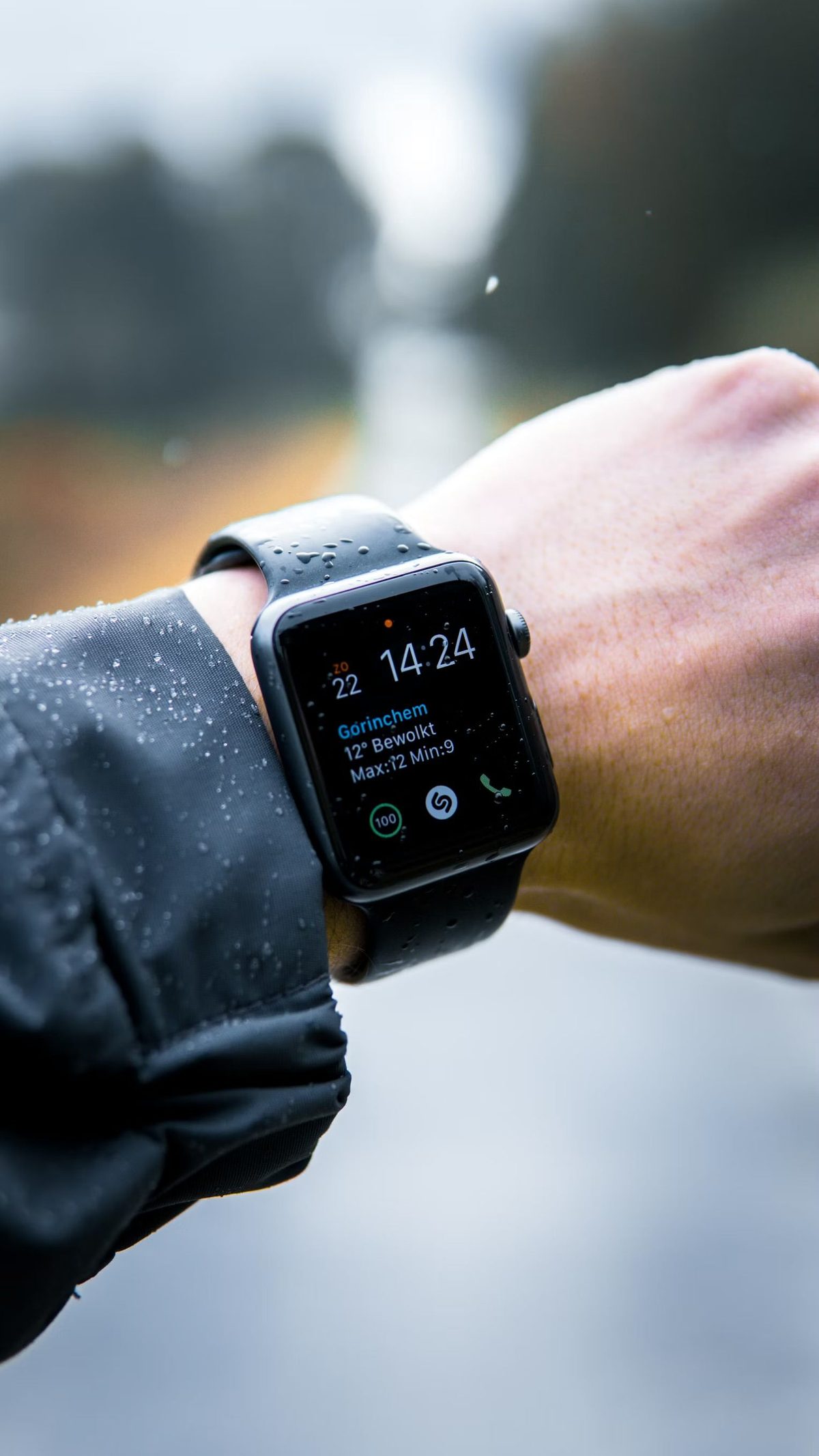
Two watches, two opinions, one running vest that doesn't care about either of them. My Apple Watch puts my VO2 max in the "below average" band for my age. My Garmin, worn on the same run, has occasionally put it three points higher. For most of this year I let that gap quietly wind me up — I've since stopped, and the run I do now looks almost identical, which is the whole point.
I've been here before with a different metric. I stopped checking my wearable's stress score earlier this year because the checking itself was making the number worse. VO2 max turned out to be the same trap wearing different clothes — except this one comes with a badge that says "below average" attached to your actual age, which is a genuinely efficient way to ruin a Tuesday morning run.
What VO2 max actually is, briefly
It's a real measurement, and I want to be fair to it before I explain why I stopped caring about mine. VO2 max is the maximum rate at which your body can use oxygen during intense exercise, and it's one of the better-established markers of cardiovascular fitness — properly measured, in a lab, on a treadmill, with a mask strapped to your face reading your actual gas exchange. Higher genuinely does mean fitter, on average, and there's decent evidence linking it to long-term cardiovascular health.
None of that happens on my wrist. Both Apple Watch and Garmin are upfront in their own documentation that the number they show you is an estimate, built from your heart rate curve, pace and personal profile during outdoor runs — not a measurement at all. It's a modelled guess dressed up in the same clinical-sounding units as the real thing.
The number that made me start running for the wrong reason
I noticed the shift around June. I'd open the post-run summary and my eyes went straight to the estimated VO2 max delta before they went to how the run actually felt. On a good week it climbed half a point and I felt disproportionately pleased with myself. On a week where it dipped, I'd add an unplanned extra kilometre at the end of an already-tired run, specifically to "protect the number" — which is precisely the wrong reason to run further than your body wants to that day.
That's the part that actually bothered me once I noticed it. I wasn't training smarter because a dashboard was watching. I was training defensively, against a modelled estimate that two devices on the same wrist couldn't even agree on — which sent me back to check whether the underlying heart rate feeding that estimate was even accurate in the first place. It wasn't, not consistently.
The disagreement that finally broke the spell
The moment that changed things was genuinely mundane: a Sunday long run, watches on both wrists out of pure curiosity, and a three-point gap in the VO2 max estimate by the time I got home. Same route, same pace, same person. If the two most trusted fitness-wearable brands can't agree on my own cardiovascular fitness to within a meaningful margin, treating either number as a verdict on how my training is going stopped making sense to me right there on the doorstep.
It's the same lesson I took from wearing an Apple Watch Ultra 2 against a Garmin Fenix 8 for three months: the two ecosystems are built by different teams with different models, and they're going to keep disagreeing with each other in small, confident-sounding ways forever. Picking one number to obsess over just means picking whichever brand's guess you've decided to trust that morning.
What I actually track now
I haven't gone back to running with no data at all — I still like a heart-rate graph as much as anyone who owns three fitness watches. What changed is which numbers get my attention:
- Resting heart rate, over months, not days. It moves slowly and honestly, and a sustained downward trend across a training block tells me more than any single VO2 max reading.
- How the last kilometre feels, not what pace it was. If I can hold a conversation in the final stretch of a run that used to leave me wrecked, that's the fitness gain, regardless of what the summary screen says about it.
- Whether I actually want to run tomorrow. Chasing a modelled number was quietly making training feel like homework. Removing it from my attention made it feel like exercise again, which is the only version of this I've ever actually stuck with long-term.
I still glance at VO2 max maybe once a month, as one line among several in a longer trend, the same demoted role my sleep tracker's score now has since I stopped checking that every morning too. Monthly is often enough to catch a real pattern. After every single run was only ever enough to catch a mood.
Where this doesn't apply
I want to be honest about the limits of my own advice here, because it isn't universal. If you're training seriously for a marathon or a triathlon with a coach reading your numbers, VO2 max trends genuinely earn their place in that conversation — coaches use them for a reason, and month-over-month movement is a real signal worth tracking closely. This is advice for the much larger group of us running three or four times a week for our own health and sanity, for whom a post-run "below average" badge is doing nothing but quietly souring a habit that was otherwise going fine.
The honest verdict: VO2 max is a real, useful number in the hands of an athlete with a coach reading it over months. On my wrist, after an ordinary Tuesday run, it was mostly a mood-altering guess that two premium watches couldn't even agree on. I didn't delete the feature. I just stopped letting it decide whether the run counted.
If you're also working out which wearable metrics are worth your attention and which ones are just noise dressed up as data, I've been sorting through the same question across a month spent wearing a posture-training sensor and a string of other 30-day trials — most of them end with me keeping the habit and quietly ignoring the app's own scoreboard.
The rest of the wearable reviews and honest verdicts I've published — smart rings, recovery bands, sleep trackers and now this — are collected on the wearables and fitness tech hub.
Questions people actually ask
What is VO2 max, and why do wearables make such a big deal of it?
VO2 max is a measure of how much oxygen your body can use during intense exercise — it's a genuine marker of cardiovascular fitness, and a higher number generally does correlate with better endurance and, over the long term, lower cardiovascular risk. Wearables make a big deal of it because it's a single, comparable, trend-friendly figure, which is exactly the kind of number a fitness app is built to gamify.
Can a smartwatch actually measure VO2 max accurately?
Not the way a lab test can. A proper VO2 max reading comes from a supervised treadmill test with a mask measuring your actual gas exchange. Wrist wearables estimate it from your heart rate, pace and personal profile during runs — Garmin and Apple both say as much in their own support pages. It's a reasonable trend indicator, not a clinical measurement, and the two watches I wear regularly disagree with each other by several points on the same runs.
Does a "below average" VO2 max score actually matter day to day?
For most people doing moderate exercise, not much. It matters far more if you're training seriously for endurance events, where trends over months are genuinely useful. As a single number flashed at you after an ordinary run, it mostly just measures how you compare to a database of other users your age — which says very little about whether you're actually fitter than you were last month.
Should I turn off VO2 max tracking completely?
I haven't turned it off — I still let both watches log it quietly in the background as one more data point. What I stopped doing is checking it after every run and letting it decide whether the run was worth anything. Once a month is plenty for spotting a real trend; after every run is just enough to turn a metric into a mood.