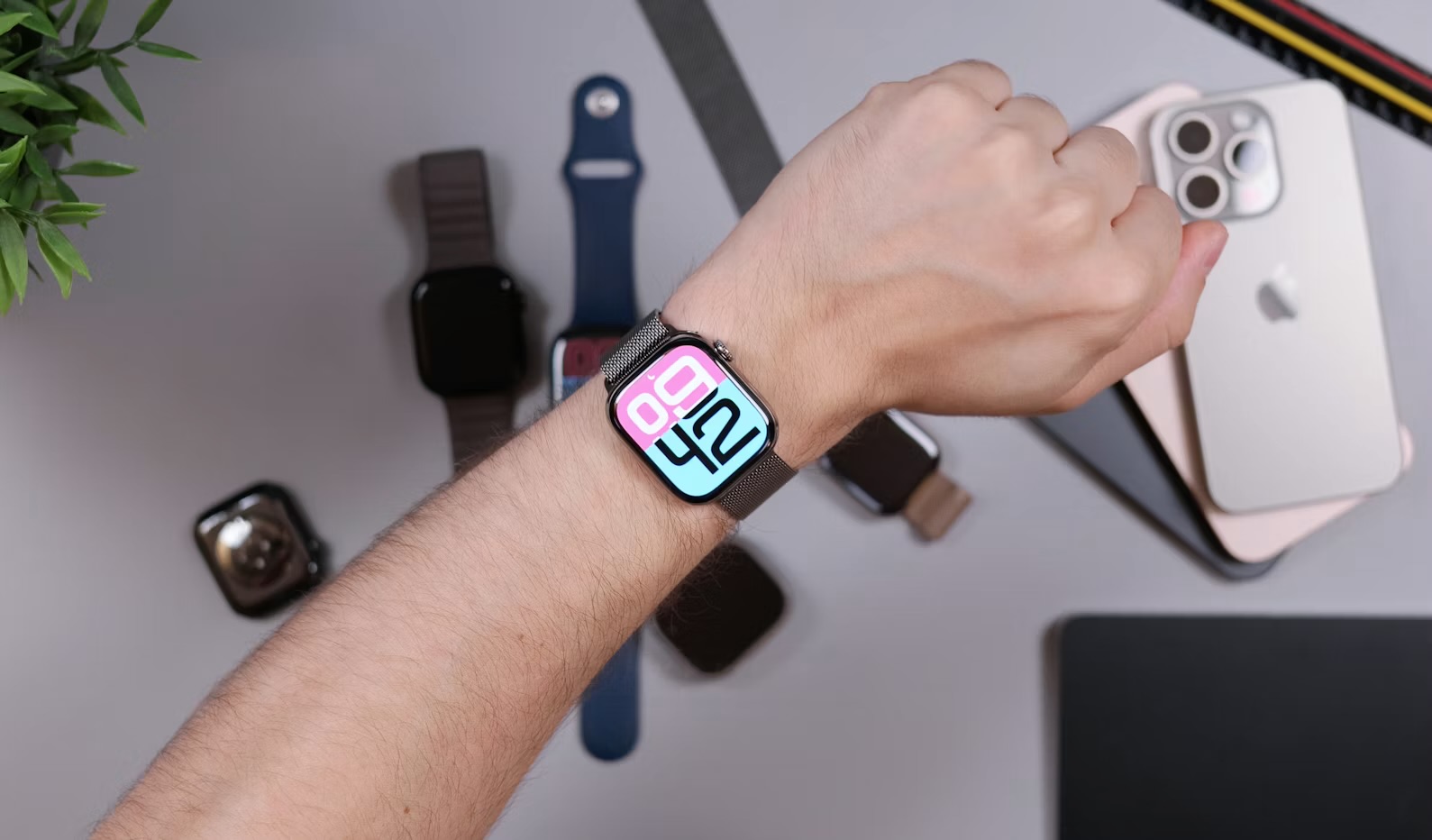
I've worn an Apple Watch every day for years, so I know roughly what it costs to track my health properly. What I didn't know was what I'd be giving up if I didn't — so I bought the cheapest fitness band on Amazon with genuine reviews, a £25 Xiaomi Smart Band, wore it alongside my Apple Watch for thirty days, and wrote down every single time the two disagreed.
This wasn't a bin-the-Apple-Watch experiment. I kept both on, one per wrist, specifically so I'd have a second opinion to check the cheap band against instead of just trusting whatever number it showed me. That turned out to matter more than I expected, because the band and the watch agreed a lot more than I assumed going in — and disagreed in one very specific, very predictable place.
What £25 actually buys you
The band itself is unremarkable in a good way — a slim AMOLED strip, a silicone strap, a companion app that asks for your basics and starts logging within a couple of minutes. It counts steps, estimates calories, tracks sleep, and reads heart rate continuously through the day. On paper that's the entire feature list of a much more expensive device from five years ago, and that's the honest context worth sitting with before you write it off: budget trackers today are doing what flagship ones did not that long ago.
Battery life is the one place it beats the Apple Watch outright — I charged it twice in thirty days, against a nightly charge for the watch. That's not a small thing if the reason you've never worn a tracker is that you keep forgetting to charge it.
Where the two devices agreed
Daily step counts stayed within a few hundred of each other on almost every day I checked, which is close enough that I'd trust the cheap band's number on its own if the Apple Watch wasn't there. Resting heart rate, taken first thing in the morning while I was still lying down, matched to within a beat or two most days. Sleep duration — total time asleep, not the breakdown of how — was consistently close as well, usually within ten or fifteen minutes either way.
If all you want from a wearable is "did I move today, and did I sleep enough," the £25 band answers both questions about as well as the watch that costs ten times as much. That's a genuinely useful thing to know, and it's the part of this test I expected to go worse than it did.
Where it fell apart
The gap opened the moment either device had to work for the number instead of just reading it. During a fast interval session, my Apple Watch's heart rate climbed and dropped in step with the actual effort; the band's reading lagged by what felt like ten or fifteen seconds and occasionally flattened out mid-set instead of tracking the spike, the exact kind of accuracy problem I went looking for when I first started testing how honest my smartwatch's calorie counts actually were. A calorie estimate built on a heart rate reading that's already wrong doesn't have much chance of being right itself.
Sleep staging was the second gap. Total sleep time held up fine, but the deep-versus-light-versus-REM split disagreed with the Apple Watch on more nights than it agreed, sometimes by a wide margin. Neither device is a clinical sleep lab, so I wasn't expecting either to be gospel — but one of them was clearly guessing with less confidence than the other, and it wasn't hard to tell which.
"It got the easy numbers right and the hard ones wrong — which is exactly backwards from where I actually wanted the accuracy."
The honest verdict
I'm not switching. The notifications, contactless pay and app integrations I've built into my day aren't things I'm willing to give up, and no £25 band replaces that half of what a smartwatch does. But I finished this test with more respect for the cheap band than I started with, not less — for anyone who just wants to know their daily step count and roughly how they slept, without paying smartwatch money or charging it every night, it does that job honestly. It's the moment you start making training decisions off its exercise heart rate that I'd stop trusting it, which is the same instinct behind why I stopped chasing my own wearable's VO2 max score on a much more expensive device.
The honest verdict: a £25 fitness band gets the resting numbers — steps, resting heart rate, sleep duration — close enough to trust. It gets the effortful numbers — exercise heart rate, sleep staging — wrong often enough that I wouldn't build a training plan around them. Buy one for the basics; don't expect it to replace a device built to work harder.
If you're deciding between devices rather than budgets, everything else I've tested on this wrist is a better next stop than taking my word for just this one. And if you want the next honest verdict before it goes live, join the Brite newsletter.
Questions people actually ask
Is a cheap fitness band as accurate as an Apple Watch or Fitbit?
Not consistently. Step counts and resting heart rate were close enough to trust day to day, but anything that needed the sensor to work hard — heart rate during a fast interval, sleep stage detection, distance without GPS — drifted further from my Apple Watch the harder the task got. Budget trackers tend to get the easy readings right and the demanding ones wrong, which is exactly backwards from where most people actually want accuracy.
What do budget fitness trackers get wrong most often?
Heart rate during exercise was the biggest gap in my test — it lagged behind effort and sometimes flattened out mid-interval instead of climbing with it. Sleep staging was the second: it logged total sleep time reasonably well but its deep-versus-light split disagreed with my Apple Watch on more nights than it agreed. Both are sensor and algorithm problems that cheaper hardware and a less-tuned model simply can't fully solve yet.
Is a cheap fitness tracker worth buying at all?
For the basics, yes. If what you actually want is steps, a rough calorie estimate, sleep duration and two weeks of battery life without paying smartwatch prices, a £25 band does that job honestly. Where it stops being worth it is the moment you start making training or health decisions off numbers it was never built to get right — that's where the gap with a premium device actually costs you something.
Can a budget fitness band replace a smartwatch?
Not for me, and probably not for anyone who already relies on notifications, contactless pay or app integrations day to day — none of that is really what a £25 band is for. But as a pure activity and sleep tracker, worn by someone who doesn't want a screen buzzing on their wrist all day, it genuinely covers the basics. The honest answer is that it replaces the habit-tracking half of a smartwatch, not the computer-on-your-wrist half.