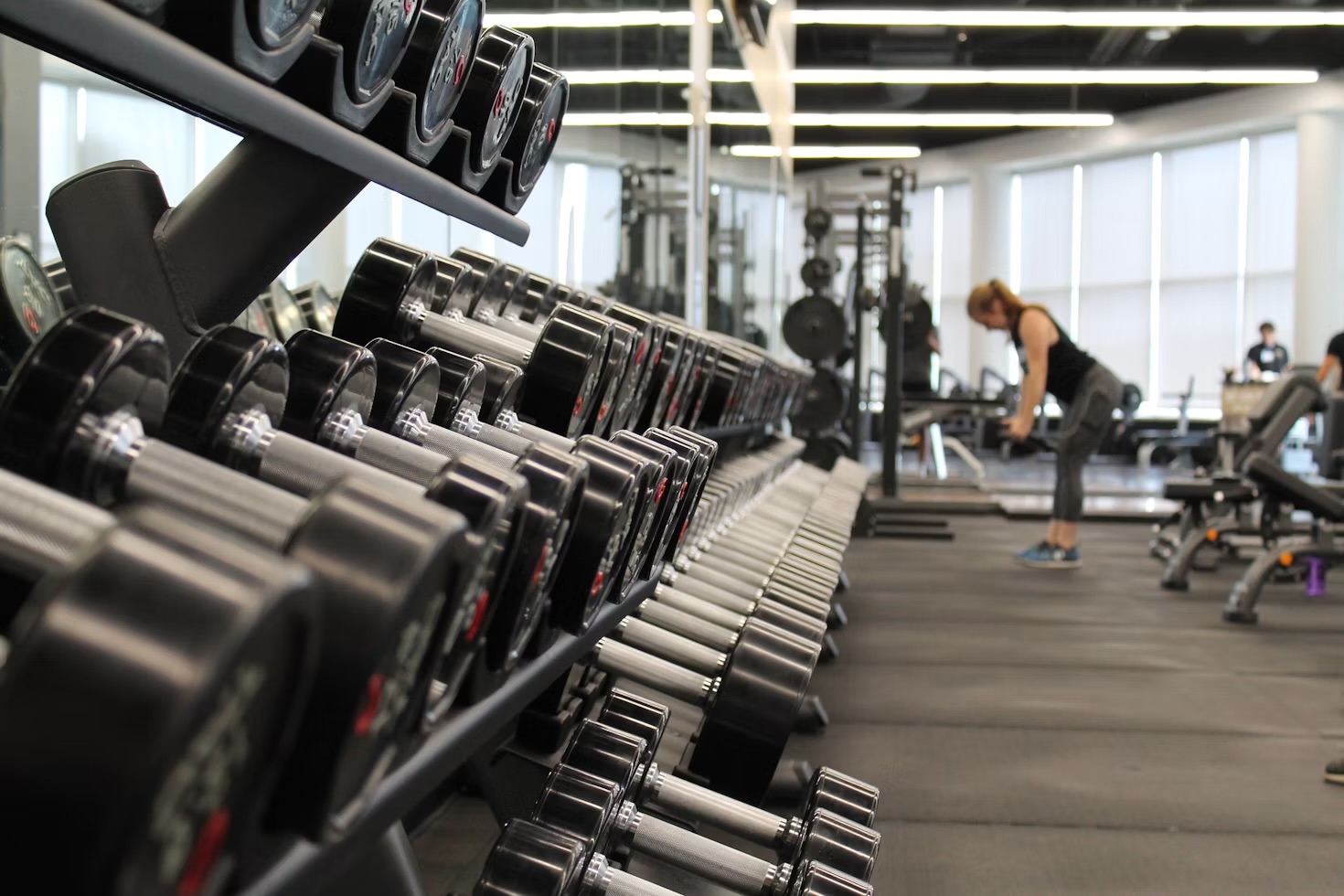
I assumed the app would win by a mile. Eight weeks of logging every lift twice, once on my phone and once in a notebook, left me with a verdict I did not expect.
For about three years I tracked my gym sessions the sensible, modern way: an app, a tidy graph and a little confetti animation when I hit a personal best. Then a friend who has lifted for twenty years watched me thumb through my phone between sets and said, "You know a pen doesn't need updating?" I laughed it off. I also couldn't stop thinking about it, so I ran a proper test.
For eight weeks I logged every strength session in both places. The app was a popular gym tracker with a free tier. The notebook was a £3 A5 one from a stationery shop, ruled by hand into columns. Same lifts, same weights, same sets. Here is what each one was actually good at.
Round one: speed in the gym
The app wins on set-up and loses on the floor. Opening it, finding today's workout, tapping the right exercise and entering weight and reps took me around fifteen seconds per set when everything went well. When the gym Wi-Fi was patchy, or a notification pulled me into another app, it took longer, and more than once I lost my place in the session.
The notebook took about five seconds a set. There is nothing to unlock and nothing to load, and it cannot interrupt me. The cost is that I wrote the plan out by hand the night before, which took ten minutes a week. That is the whole trade in one sentence: the app is quicker to set up, the notebook is quicker to use.
Round two: what the app caught that I missed
I want to be fair, because the app earned its place on several counts.
- Progress at a glance. It charted my bench press over eight weeks without me doing any sums. In the notebook I had to flick back through pages to see the same thing.
- Rest timers. It started a timer automatically. I kept forgetting to look at the clock, and my rests drifted from 90 seconds to nearer three minutes.
- Suggested weights. It nudged me to add a little weight when I'd hit all my reps two sessions running. Left alone, I sat on the same weight for far too long.
- Not losing it. A notebook can be left in a locker. An app is backed up without you thinking about it.
Round three: what the notebook caught that the app didn't
This is the part that surprised me. Because writing takes a moment, I wrote less, and what I wrote was better. Small notes like "left shoulder pinchy on the last two reps" and "slept badly, felt flat" sat next to the numbers. The app has a notes field, but I rarely opened it. In the notebook it was just the next line on the page.
Those notes mattered. Looking back, nearly every stalled lift lined up with a bad night or a niggle, something a graph of weights simply cannot show. I had already noticed the same thing when I checked how accurate my fitness tracker's calorie count really was: numbers without context are easy to trust and hard to learn from.
"The app told me what I lifted. The notebook told me why I lifted it badly."
The distraction problem nobody mentions
Every gym app lives on the same device as your messages, email and news. I noticed that on app days I spent noticeably longer between sets, because opening the phone to log a set was one tap away from opening everything else. On notebook days I finished sessions about ten minutes sooner. I didn't time it with anything fancy, just the clock on the wall, so take it as a rough impression rather than a result. It does match what I found when I moved my phone out of the bedroom: the phone is rarely the problem, the habit around it is.
Where the rest of my kit fits
I also expected my watch to make the notebook redundant. It records heart rate and workout duration well, but it isn't a place to record "bench, 60 kg, 3 sets of 8". The notebook ended up filling that gap, and I now think of the pair as a division of labour: the wearable measures my body, the page records my intent. If you're working out how much your wearable data is worth, my wearable data guide is the place to start.
What I'm actually doing now
I did not pick a winner in the way I expected. I kept the notebook for the gym floor and I still use the app for one job: looking at the long-term chart once a month. That last bit fits neatly into my 20-minute weekly review, where a minute spent reading the week's notebook pages is the most useful minute of the lot. It is also the same instinct that made me try handwriting notes on an iPad: writing slows you down just enough to notice what you are doing.
My verdict: if you lift for the first time or you like data, start with the app, because the timers and weight suggestions do real work. If you've been lifting a while and you're stuck, buy a £3 notebook for a month. You'll record why a session went badly, and that's the thing the graph can't tell you.
If you want more of this
More of what I've actually worn and tested lives on the wearables and fitness tech hub. And if you'd like one honest tech experiment in your inbox each week, join the Brite newsletter. I only write when there is something worth saying.
Questions people actually ask
Is a gym tracking app better than a notebook?
It depends on what you need. An app is better for charts, rest timers and weight suggestions, which help beginners most. A notebook is faster to use between sets, has no distractions and makes it easy to add context, such as sleep or aches, that a graph can't show.
What should I write down in a gym logbook?
The exercise, weight, sets and reps for every lift, plus a short note on how it felt. Add sleep and any niggles. Those notes are what explain a stalled lift later.
Do I need a paid gym app to track progress?
No. The free tier of most popular gym trackers logs weights, sets and reps and shows basic charts. A cheap notebook does the same job with no subscription at all.
How long should I rest between sets?
For strength work, around 90 seconds to three minutes is common, depending on how heavy the lift is. I found a timer useful because my rests drifted longer without one.
Can my smartwatch replace a gym log?
Not really. A watch records heart rate and workout time well, but most don't record the weight on the bar. I use the watch to measure my body and a notebook or app to record the lifts.