For years my phone slept eighteen inches from my head, and I told myself that was fine because I used it as my alarm. Then I did the maths on how many of my nights and mornings that little arrangement was quietly wrecking, bought a £12 clock, and banished the phone to the hallway. This is the unglamorous case for the single most effective tech change I've made all year — one that involves buying less, not more.
I write about gadgets for a living. My instinct, always, is to add something — a smarter device, a better app, one more clever automation. So it's a little humbling to admit that the change with the biggest payoff this year was subtraction: I took the most powerful computer I own and refused to let it into the room where I sleep. No new purchase required beyond a clock that costs less than a takeaway. And yet it did more for my sleep and my mood than any wearable, any sleep-tracking ritual, any wind-down app I've ever tested.
The lie I'd been telling myself
"I need it for the alarm." That was the whole justification, and it's the same one almost everyone uses. It's also nonsense, and I knew it was nonsense, because alarm clocks have existed for roughly two hundred years and cost about a fiver. The alarm was never the reason the phone was on my nightstand. The reason was that I wanted it there — for the last scroll before sleep, for the "quick check" when I woke at 3am, for the reflexive grab before my feet had even hit the floor.
And those weren't harmless. The last-thing-at-night scroll pushed my actual sleep back by twenty, thirty, sometimes forty-five minutes past when I got into bed. The 3am check turned a normal half-wake — the kind everyone has — into a full boot-up of my brain, complete with an email I now couldn't un-see until morning. And the first-thing grab meant the opening move of my entire day was reacting to other people's agendas before I'd had a single conscious thought of my own. None of it was a crisis. All of it was a slow tax.
What I actually did
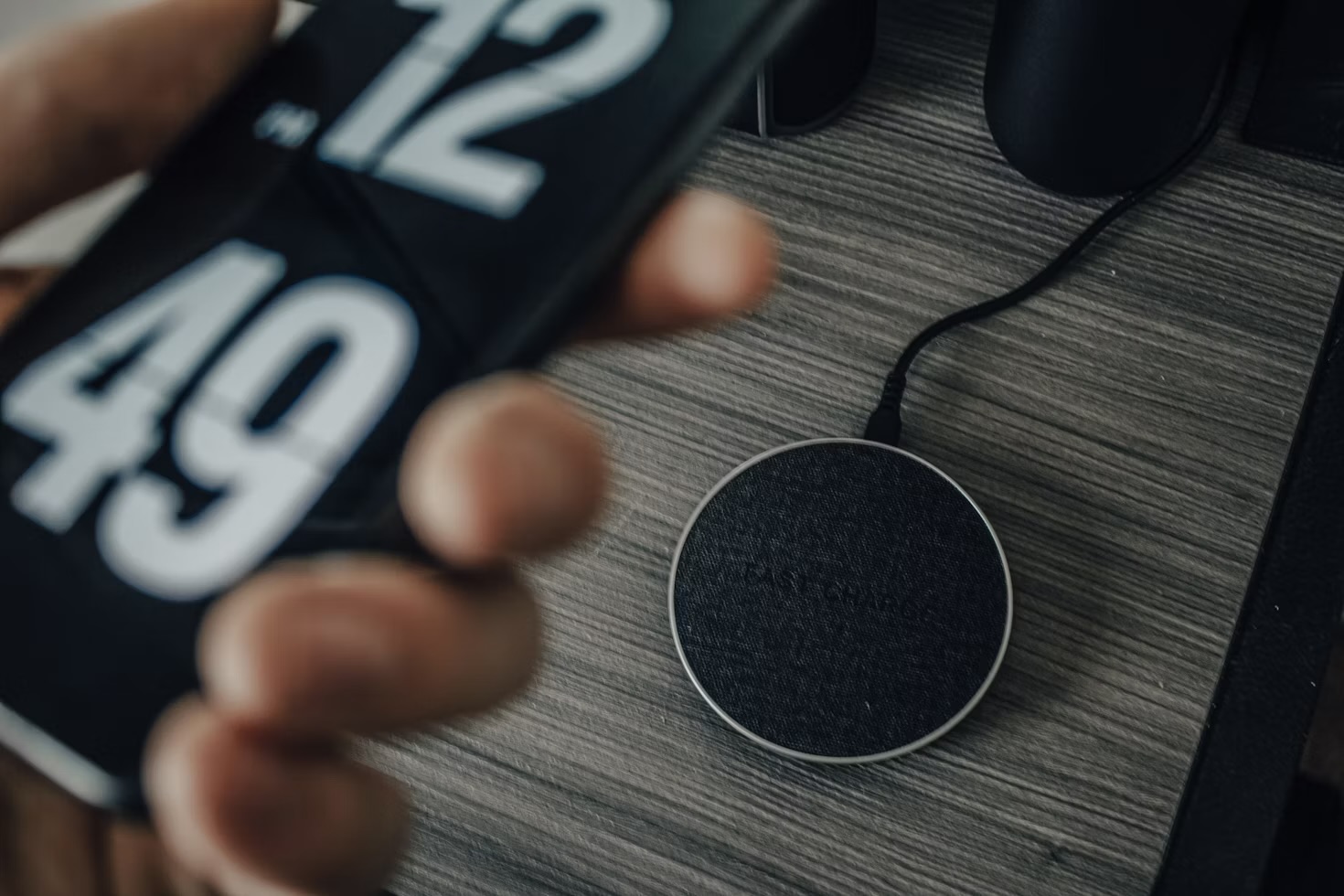
There was no elaborate system. I bought a small clock, put it on the nightstand, and moved my phone charger to a shelf in the hallway. That last part is the whole trick: the charger, not the phone. Once the only place the phone can spend the night is in another room, you don't have to summon willpower at midnight — the decision is already made by where the cable lives. (If you're wondering whether leaving it plugged in all night harms the battery, that was one of the battery myths I finally sat down and checked — it doesn't.) I set one recurring alarm on the phone for an hour before bed labelled "plug me in," and when it goes off, the phone goes to the hallway and stays there until morning.
For a while I worried I'd miss a genuine emergency. So I turned on the feature every modern phone has that lets calls from a handful of starred contacts ring through even in silent — a two-minute setup that removed the last excuse. Worth saying: that feature has been standard for years, and it works exactly the same on the handset I've been using for four years without upgrading. In months of doing this, the number of real 3am emergencies has been exactly zero, which is roughly what I'd have guessed if I'd been honest with myself from the start.
"The phone was never on the nightstand for the alarm. It was there because I wanted it there — and the whole point was to stop letting 'want at midnight' make that call."
What changed — and how fast
Faster than I expected. Within the first week, the most obvious thing was how much earlier I actually fell asleep. Without a lit screen in my hand, "in bed" and "asleep" stopped being forty minutes apart. I'd been blaming my racing mind for that gap for years; it turns out a fair chunk of it was just the phone. I've written before about how I stopped tracking my sleep every night because the score was making me anxious — and this is the natural next chapter of that same story. Take the phone out of the loop entirely and there's nothing to obsess over, nothing to check, nothing to score. You just sleep.
The mornings were the bigger surprise, though. When the first thing your hand finds isn't a glowing feed, you get up. I don't mean that as a wellness slogan — I mean I literally got out of bed faster, because there was no reason to lie there. The twenty-minute horizontal scroll that used to open my day simply had nowhere to happen. I'd walk to the hallway, and by the time I'd picked the phone up I was already standing, already moving, already awake. That single change — being vertical before being online — reset the tone of the whole morning.
What I put on the nightstand instead
You can spend nothing here and be perfectly happy: a basic clock does everything the phone did for waking you up, minus the feed. But because I'm me, I tried a couple of upgrades, and two were genuinely worth it.
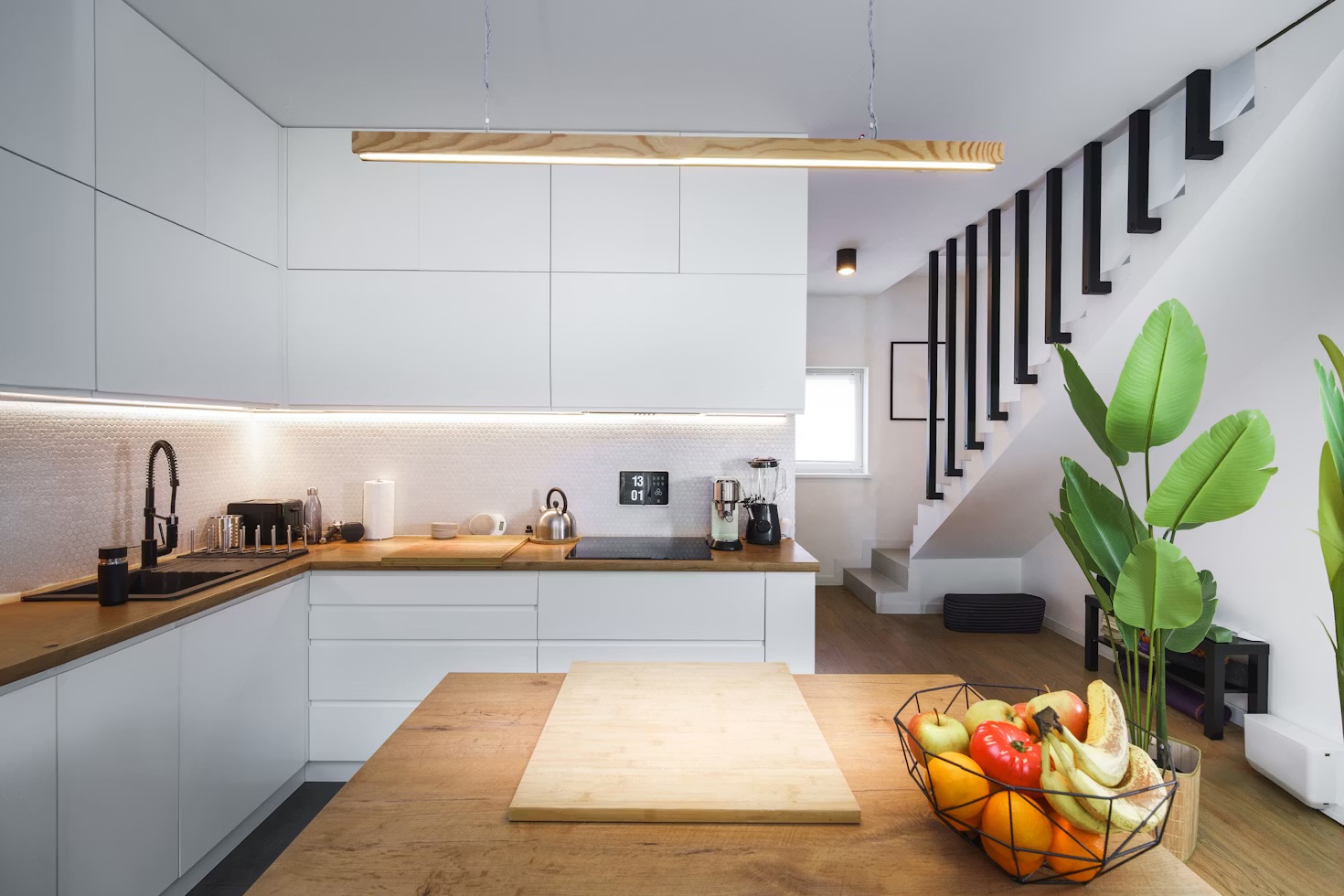
The first is a small smart display — the kind of smart-home device I usually reserve for the kitchen — repurposed as a bedside clock. A Nest Hub or similar shows the time, runs a gentle alarm, and can dim to almost nothing overnight, but crucially there's no app to fall into. It answers a question and then leaves you alone, which is exactly what you want from something a foot from your face at 6am. The second, and the one I'd actually push people toward, is a sunrise-simulation lamp that brightens gradually before the alarm. Waking to light rather than a jolt of sound is a small luxury that turns out to matter a lot in a British winter.
What ties both together is a principle I keep relearning: a device that does one thing can't steal your attention with a second thing. It's the same reason a good greyscale phone experiment works, and the same reason the bedroom benefits from being a room your most distracting object simply isn't allowed into. Single-purpose is a feature. And while I was at it, I finally got the room itself right — the boring stuff, like letting the smart thermostat drop the bedroom a couple of degrees at night — which did more for my sleep than any app ever pretended to.
The honest verdict: Of everything I've trialled this year, moving the phone out of the bedroom is the change I'd least want to give back — and it cost me twelve pounds and one slightly awkward first week. It won't fix insomnia or replace a proper wind-down routine, but as a single, cheap, reversible lever, nothing else I've tested moves sleep and mornings this much for this little effort.
The one honest caveat
I won't pretend it was frictionless. The first three or four nights I felt genuinely twitchy — a phantom reach toward a nightstand that no longer had anything on it. There's a real, slightly embarrassing withdrawal to sitting in bed with nothing to do but, you know, go to sleep. I kept a paperback on the nightstand for exactly this, and it turned out to be the perfect replacement fidget: something to hold and read that can't notify me, can't refresh, and quietly makes me sleepy rather than wired. By the end of the first week the reach was gone, and I stopped noticing the absence at all.
That's the whole pitch, really. Not a gadget, not an app, not a subscription — just a small act of subtraction that hands you back the two most vulnerable moments of your day, the same trade that worked when I took a screen off my desk instead of adding one. If you only try one thing from anything I write this month, try this one. It's free, it's reversible, and you'll know within a week whether it's for you.
If you want the next honest experiment before it goes live, join the Brite newsletter — no hype, just what actually earned a place in my week.
Questions people actually ask
Should you keep your phone out of the bedroom?
If your phone is the last thing you look at and the first thing you touch, then yes — moving it out of the bedroom is one of the highest-return changes I've made to my sleep and my mornings. It removes the temptation entirely rather than relying on willpower at midnight. You don't need to be a purist about it; the win is simply that the phone isn't within arm's reach of the pillow.
What can I use instead of my phone as an alarm clock?
A cheap analogue or digital alarm clock does the job for a few pounds. If you want something smarter, a small smart display like a Nest Hub works well as a bedside clock and sunrise alarm without a scrolling feed attached to it — it wakes you and shows the time, but you can't doom-scroll on it. A dedicated sunrise-simulation lamp is the nicest upgrade if you struggle to wake in winter.
Does having your phone in the bedroom affect sleep even on silent?
In my experience, yes — the problem isn't only the notifications, it's the presence. Even silenced, a phone within reach is an open invitation for "just one quick check" before lights out and again the moment you stir in the night. Removing it takes that decision off the table completely, which is why it beat every do-not-disturb schedule I tried.
How do I stop using my phone in bed?
The trick that finally worked for me was physical, not digital: I put the charger in another room, so the phone has nowhere to live overnight except away from the bed. Pair that with a real alarm clock so you have no excuse to keep it close, and set a wind-down alarm an hour before bed as the cue to plug it in and walk away. Environment beats willpower every time.