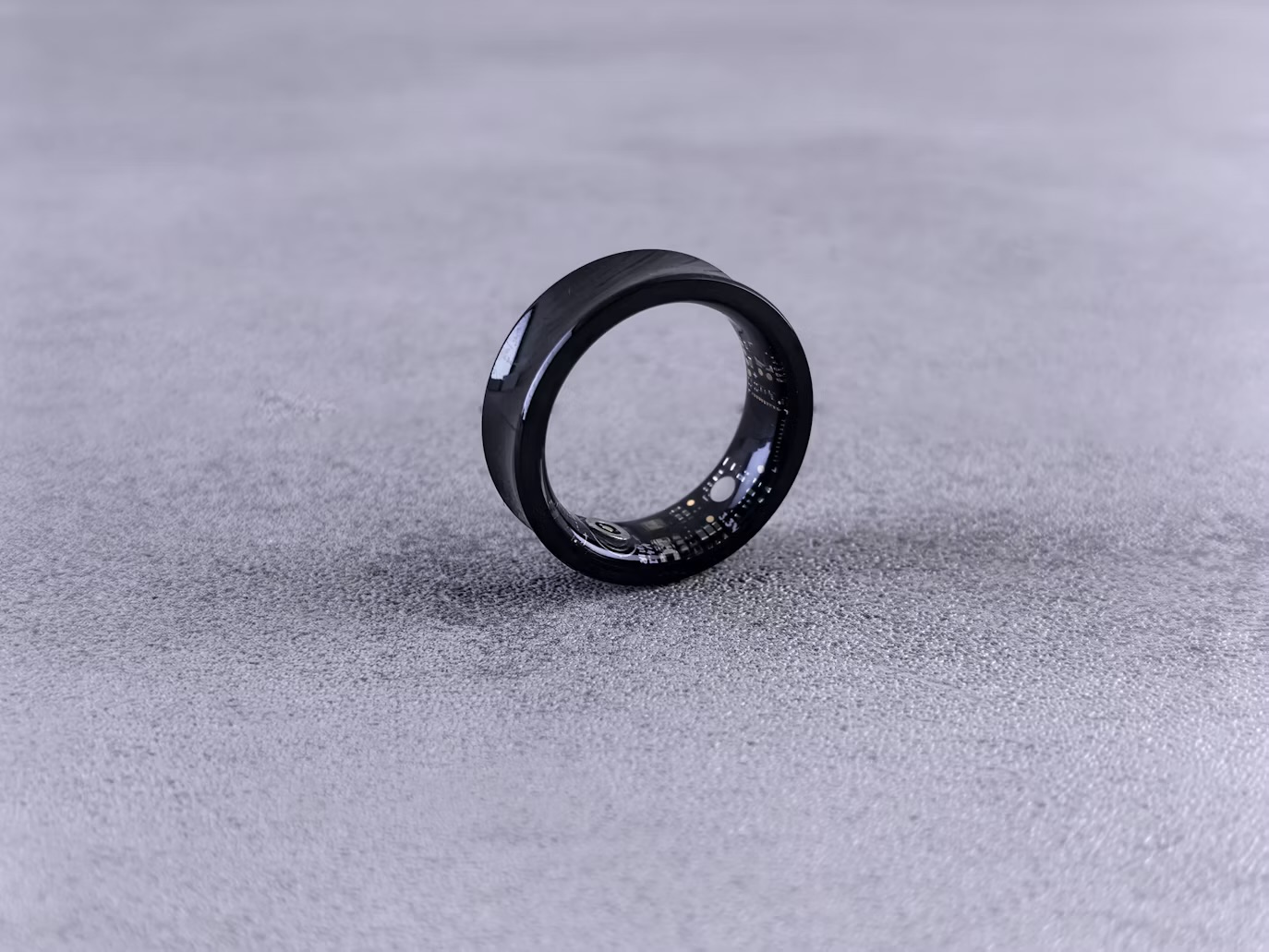
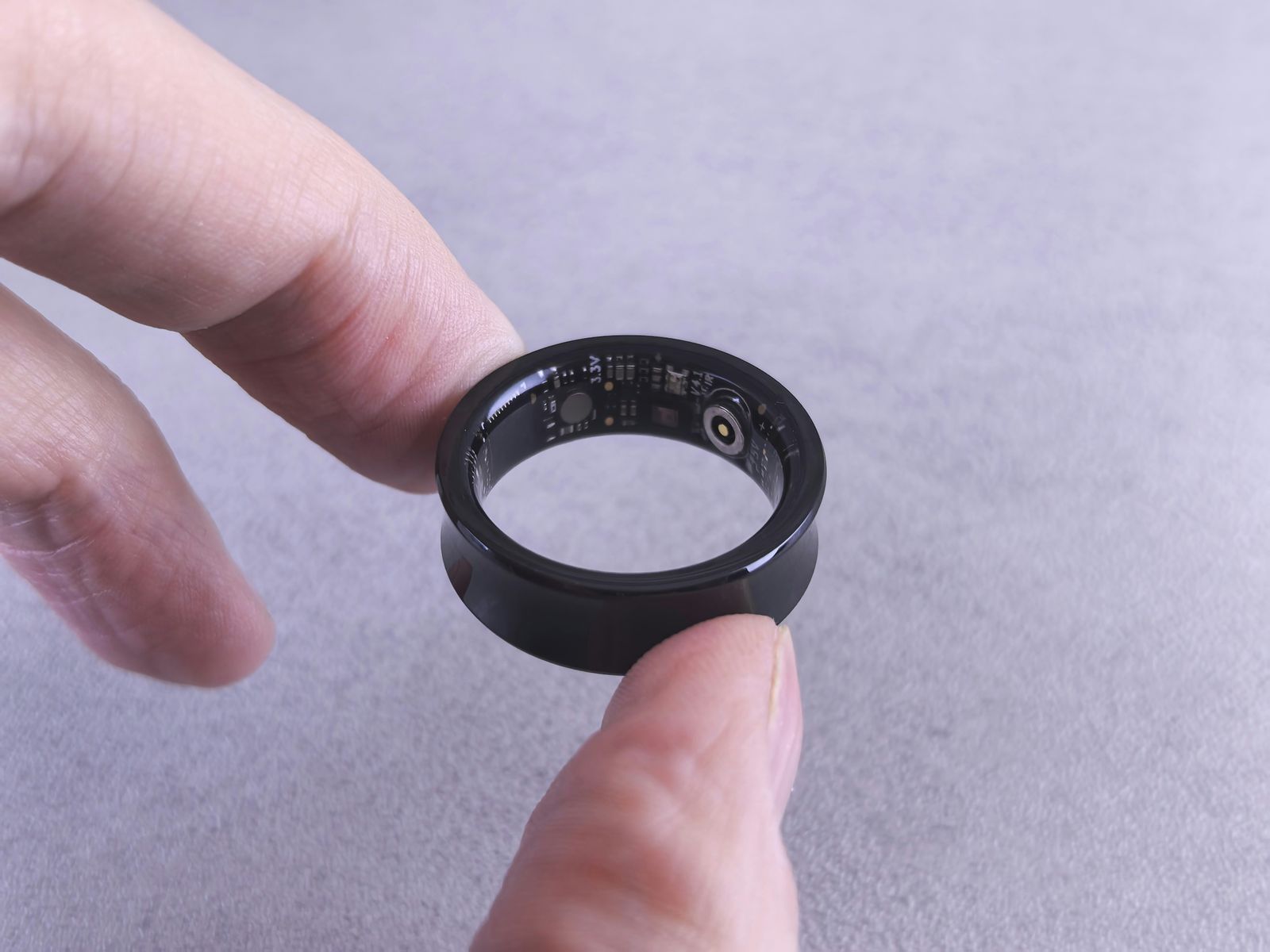
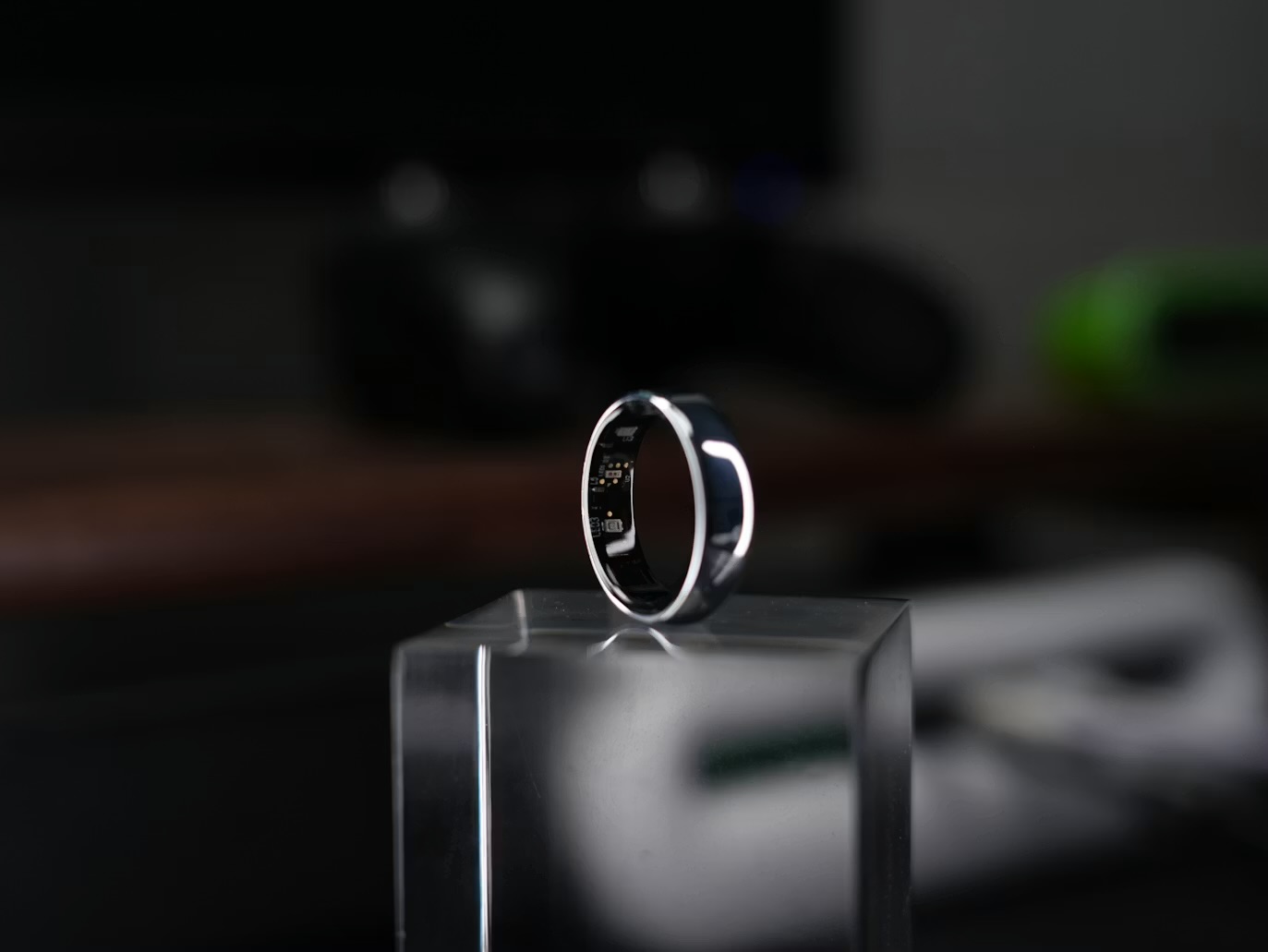
For three weeks I slept with a smart ring on one hand and a smartwatch on the other wrist, every single night, comparing sleep stages, wake-ups and battery habits against each other rather than against a lab. The two devices agreed on more than I expected. The thing that actually decided which one I kept wasn't the data at all — it was which one I could be bothered to remember to charge.
This wasn't a spec-sheet exercise. I already knew, on paper, that a ring uses a photoplethysmography sensor pressed against a finger artery and a watch uses roughly the same tech against the wrist, with the wrist version generally considered the noisier read. What I wanted to know was whether that theoretical accuracy gap actually showed up in three weeks of my own real, unglamorous sleep — the nights I fell asleep on the sofa first, the nights my arm went numb and I flipped positions four times, the nights I just slept badly for no reason at all.
What the ring got right that the watch structurally couldn't
The clearest difference showed up in sleep-stage detail, not total sleep time. Both devices landed within about fifteen minutes of each other on how long I was actually asleep most nights, which is close enough that I wouldn't pick a winner on that number alone. Where they split was in how confidently each one called deep sleep versus light sleep versus REM. The ring's readings were steadier night to night — the kind of consistency that makes a trend line actually mean something. The watch's stage breakdown jumped around more, and on two separate mornings after nights where I'd slept with my wrist bent under the pillow, it reported unusually little deep sleep that the ring didn't corroborate at all.
The reason isn't mysterious once you think about where each sensor sits. A finger has a strong, close-to-the-bone arterial signal that barely moves once you're asleep. A wrist is softer tissue, further from the nearest big artery, and it's the body part most likely to get folded or trapped under something for a chunk of the night. The watch isn't badly engineered — it's reading a noisier signal from a noisier location, and three weeks of real sleep is exactly the mess that exposes that gap.
Where the watch actually won
It would be a lopsided piece if I stopped there, because the watch wasn't strictly worse — it was better at the thing rings can't do at all: everything that happens before you fall asleep. Screen-on evening notifications, a heart-rate nudge during a tense phone call, a live step count on a walk — the watch does a job the ring was never built for, and for two of those three weeks it was also handling my daytime workouts, which the ring tracked far less usefully. If you're weighing this the same way I did, the honest answer depends on whether the thing you actually check disappears at bedtime; that's the same distinction I ended up drawing out fully in the wearable features I actually use every day, and the ones I turned off.
The other place the watch pulled ahead was legibility in the moment. Glance at a watch face at 3am and you get a time, at minimum, without unlocking anything. A ring gives you nothing until you pick up your phone — which, if you're the sort of person prone to a middle-of-the-night scroll, is arguably a feature rather than a flaw, but it's worth being honest about which one you are.
"The watch told me more about my day. The ring told me the truth about my night. Once I framed it that way, the decision stopped being about accuracy and started being about which eight hours I actually cared about measuring."
The battery habit that decided it, not the sensor
Here's the part the spec sheets never quite capture: a smartwatch that needs charging every one to two days is, in practice, a device you sometimes forget to put on before bed because it's sitting on a charger. That happened to me four times in three weeks — not because I don't care about the data, but because charging habits are boring and easy to skip. Every one of those four nights, only the ring had sleep data, simply by not needing anything from me. A ring that runs four to seven days on a charge can sit on your hand indefinitely; you top it up during a shower or a coffee break, and it's never the thing missing at 11pm.
That's not a sensor advantage — it's a design-for-compliance advantage, and it mattered more over three real weeks than half a percentage point of stage-detection accuracy ever did. It's the same lesson I kept re-learning testing a Whoop band against an Oura ring for recovery scores: the device still on your body when it matters beats the one with the cleverer algorithm.
The honest verdict: for sleep specifically, the ring won on both accuracy and — more decisively — on the fact that it's never the one you forgot to charge. If your priority is daytime training, live notifications and a screen you can glance at, keep the watch and accept a slightly noisier sleep read. If sleep is the metric you actually act on, a ring's whole design is built around not needing anything from you at bedtime, which turns out to matter more than the sensor spec.
What I actually wear now
I kept both, which sounds like a cop-out but isn't — the watch stays on for training days and notifications, and it comes off at 9pm most nights, charging while I read. The ring never comes off. If I could only keep one, though, it would be the ring, purely because sleep is the metric I check every single morning and it's the one that never let me down by being flat on a nightstand. If you're deciding which to buy first rather than testing both like I did, my 30 days wearing a smart ring on its own is the more useful read, and the wrist-first case is in Apple Watch Ultra 2 vs Garmin Fenix 8 for anyone training seriously enough that the watch's daytime strengths outweigh a noisier night reading.
Whichever one you pick, the reading matters more than the device — I went through a phase of checking a sleep score every single morning before realising it was making my sleep worse, not better, which is why I stopped tracking my sleep nightly and started paying attention to how I actually felt instead. The same habit crept into daytime numbers too — why I stopped checking my wearable's live stress score is the same lesson from the other side of the clock.
One thing that helped more than either device: I set up an Apple Shortcut that reads my previous night's ring data each morning and quietly rewrites my day's calendar around it — an easy Monday when recovery is poor, a harder session left alone when it isn't. If you've never automated anything on your phone before, this is the exact step-by-step build I started from, and it's the reason the data from either wearable actually changes what I do instead of just sitting in an app.
Want the next honest comparison before it goes live? Join the Brite newsletter — no fluff, just what's actually worth your money.
Questions people actually ask
Is a smart ring or a smartwatch more accurate for sleep tracking?
Over three weeks wearing both on the same nights, total sleep time and wake counts were close enough not to matter. The ring was consistently better at sleep stages, because a finger has a stronger, steadier pulse signal at night than a wrist that keeps drifting under a duvet.
Do I need to charge a smart ring every night?
No — a modern smart ring typically runs 4 to 7 days on a charge, so you charge it during the day and it's never on your finger at bedtime. That is the opposite of most smartwatches, which usually need a nightly top-up to have any battery left for sleep tracking.
Can a smartwatch track sleep as well as a ring?
It can get most of the way there, but only if you actually remember to charge it before bed and don't mind something bulky on your wrist all night. In my three weeks, that discipline — not the sensor itself — was the real difference between the two.
Is it worth buying both a smart ring and a smartwatch?
Only if you genuinely use both jobs — a watch for live pace, heart-rate zones and notifications during the day, and a ring for the thing a watch does badly, which is disappearing on your hand all night. Buying both purely to compare them, as I did, isn't necessary once you know which job you actually need done.