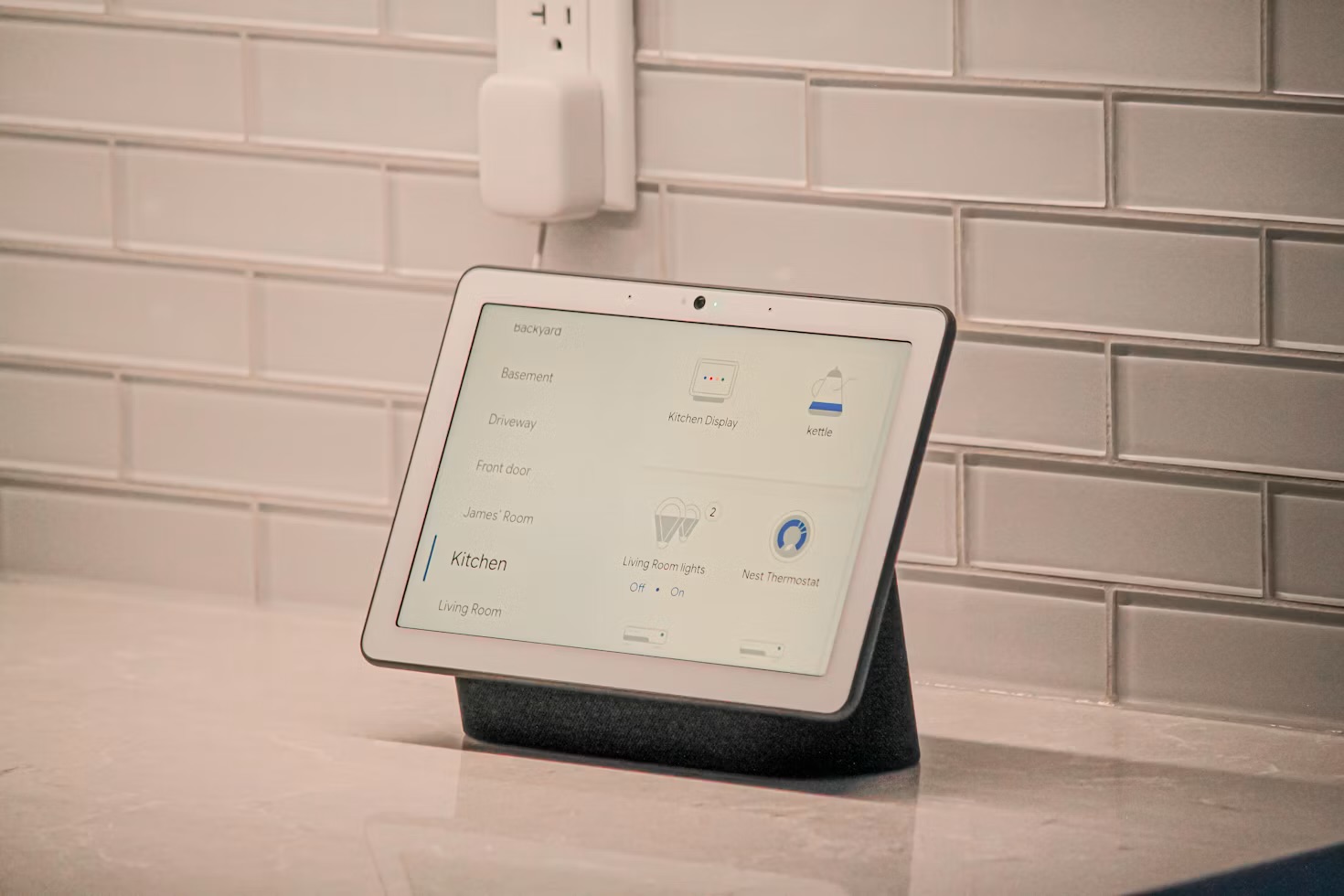
I ran a Nest Learning Thermostat in this house for two winters. This year, after a boiler swap forced my hand, I installed an Ecobee instead and gave it a full heating season before writing a word of this. This is the honest comparison — not a spec sheet, a lived-in one.
This is beginner level: fitting either one is a job for an evening with a screwdriver, not a tradesperson, provided your existing wiring is in reasonable shape. If you're still deciding whether a smart thermostat is worth the money at all, read my 30-day smart thermostat verdict first — this piece assumes you've already answered yes and are choosing which one.
What I was actually comparing
Same house, same radiators, same combi boiler — only the season and the thermostat changed. The Nest ran October to March two years ago; the Ecobee ran the equivalent months this winter just gone. Weather isn't identical year to year, so I'm not going to hand you a spreadsheet and pretend this was a lab test. What I can tell you is how each one behaved day to day, because that's the part a spec comparison never captures.
Both are genuinely good products. Neither is a scam or a downgrade from a dumb dial. The differences that matter are narrower and more specific than the marketing suggests, which is exactly why they're worth spelling out properly.
Round 1: Installation and the C-wire question
Both took under an hour, wiring photographed first as always. Nest was slightly more forgiving of my ageing wiring — it can trickle-charge its internal battery off most systems without a dedicated C-wire, and it told me clearly when that charge was running low rather than just cutting out. Ecobee wants a C-wire more insistently, but ships a Power Extender Kit that improvises one out of two spare terminals most UK combi setups already have. Mine needed it; it took an extra fifteen minutes and worked first time.
The honest verdict: if your existing thermostat wiring is a mystery to you, Nest is the gentler start. If you're comfortable following a wiring diagram for quarter of an hour, the Ecobee kit is no real barrier.
Round 2: One sensor, or several
This is the single biggest practical difference, and it's the one nobody explains clearly enough before you buy. Nest reads the temperature at wherever it's mounted — for most houses, a hallway. Ecobee ships with one wireless remote sensor in the box, and you can add more, so it can average the temperature across the actual rooms you use rather than the corridor between them.
My hallway runs a couple of degrees cooler than my living room. With the Nest, the living room was consistently over-heated because the hallway reading never caught up. With the Ecobee sensor sitting on a living-room shelf, the room I actually spend evenings in is the one being measured. If your home has more than one "temperature zone" in daily use, this alone might settle it.
Round 3: The "auto-learning" claim, tested
Nest's headline feature is that it learns your schedule by watching when you adjust it, with no app setup required. In practice it took about ten days of manual nudging before it stopped guessing wrong, and it never fully learned an irregular week — it's built for a routine, and mine mostly has one, so it settled in well.
Ecobee doesn't claim to learn silently; you build a schedule in the app up front, plus geofencing that drops the temperature when your phone leaves the house. Less magic, more control. I found the geofencing more reliable than Nest's learning ever became, because it responds to something concrete — where my phone is — rather than inferring a pattern from a few weeks of button presses.
Round 4: Living with the app
Neither app is bad. Nest's is calmer and simpler, which suits someone who wants to set it and stop thinking about it. Ecobee's shows more — per-sensor readings, more detailed history, a proper monthly usage report — which suits someone who actually wants to look at the data occasionally, as I do most weekends with a coffee.
Both let you override from the wall unit itself without touching a phone, which matters more than either company's marketing implies. My partner, who has opinions about temperature but no interest in an app, uses the physical dial on both and has never noticed which brand is currently installed.
Round 5: Which ecosystem it actually plays with
This is where the two genuinely part ways, not just on features but on politics. Ecobee has direct, built-in Apple HomeKit support alongside Alexa and Google Home — it speaks to all three without a workaround. Nest talks cleanly to Google Home and Alexa, but Google has never given it native Apple HomeKit support; getting one into an Apple Home household means an extra third-party bridge device, which is one more thing that can lose connection at 2am in January.
If your house is already committed to an ecosystem, this decides it before anything else on this page does. I wrote more broadly about why that decision comes first in the smart home starter kit playbook, and the underlying standard that's slowly making this less painful is covered in my look at what Matter 1.6 actually fixed. Both thermostats here still lean on their maker's cloud for parts of what they do; if that's a trade-off you'd rather not make at all, I've since rebuilt the rest of my smart home on Home Assistant so none of it depends on the internet staying up.
Round 6: What it did to the bill
Both cut a meaningful amount off what a dumb dial was costing me — roughly in the same ballpark, close enough that I wouldn't choose between them on this number alone. The bigger factor by far was whether I trusted the thing enough to leave it in auto mode rather than manually overriding it most evenings, because every override erases whatever the schedule was about to save. Ecobee's room-accurate sensor made me trust it faster, simply because the temperature it reported matched what I actually felt.
"The thermostat that saves you money is the one you stop arguing with — not the one with the cleverer algorithm."
The verdict — which one I kept
I kept the Ecobee. Not because Nest is worse — for a single-zone flat with simple, regular routines and an Alexa or Google Home setup already in place, I'd point a friend at the Nest without hesitation, and its calmer app genuinely suits people who don't want to think about heating at all. But my house has an inconsistent hallway-to-living-room gap that a single sensor can't see, and the room sensor solved a problem the Nest quietly created for two winters without me realising why the living room never quite felt right.
If I'd started this comparison in an Apple Home household, the decision would have been made before I even opened either box. That's the real lesson here: this isn't a "which is better" question so much as a "which matches the shape of your house and your existing ecosystem" one — and it's worth an honest ten minutes answering that before you spend the money.
Common mistakes worth avoiding
- Buying before checking your existing wiring. Pull the cover off your current thermostat and photograph the terminals before you order anything — it tells you in thirty seconds whether the C-wire question will even apply to you.
- Ignoring which ecosystem you're already in. If your home already runs on Apple Home, Nest's missing native HomeKit support isn't a minor footnote — it's the whole decision.
- Assuming one sensor is enough in a multi-room house. If different rooms in daily use run noticeably different temperatures, a single hallway reading will always be fighting you.
- Overriding the schedule out of habit. Both devices' savings come from being left alone. A week of manual overrides while you "get used to it" undoes most of the point of buying one.
Where this earns its keep: not the flashy learning claims either brand puts on the box, but the boring stuff — an accurate reading in the room you're actually sitting in, and a schedule you trust enough to stop touching.
Both of these belong to the wider set of gadgets I've actually kept running my house, which I collect on the smart home hub alongside the reviews and the starter-kit order I'd buy things in if I were starting from nothing.
The same ecosystem question decides more than the thermostat. I built the identical away routine on Google Home and on Alexa to see which one I would actually trust with an empty house.
Want more comparisons like this one? I send an honest, tested-at-home tech verdict to my newsletter every week — sign up here and I'll send the next one straight to your inbox.
Questions people actually ask
Is Ecobee actually better than Nest, or is it just different?
Different, mostly — they solve the temperature problem in genuinely different ways. Ecobee measures the room you're actually in via its included remote sensor; Nest measures the hallway where it's mounted and learns your habits around that one reading. Which is "better" depends entirely on whether your house has one room that runs cold, or whether you value a thermostat that quietly adapts without you touching an app. Read the rounds above rather than a star rating.
Do Nest and Ecobee both need a C-wire to install?
Neither strictly needs one, but neither is at its best without one either. Nest can run off the battery its own wiring trickle-charges in most systems, though it will warn you if that charge runs low. Ecobee ships a small Power Extender Kit that fakes a C-wire using two of your existing thermostat wires, which is the more reliable fix if your boiler control panel doesn't already have a spare C terminal. Check your existing wiring with the panel cover off before you buy either.
Which one actually costs less to run?
On my bills, close enough that I wouldn't pick a thermostat on this alone. Both cut a meaningful amount off a house previously running a dumb dial, and the gap between them was smaller than the gap between either one and no smart thermostat at all. The bigger lever is which one you'll actually trust enough to leave in auto mode rather than overriding it every evening — the savings live in the schedule you don't fight.
Does Ecobee work with Apple Home, and does Nest work with Alexa?
Ecobee has genuine, direct Apple HomeKit support built in, alongside Alexa and Google Home — it's the one thermostat here that speaks all three natively. Nest works cleanly with Google Home and Alexa, but Google has never given it direct Apple HomeKit support; the only route in is a third-party bridge device, which is an extra box and an extra thing that can break. If your house already runs on Apple Home, that single fact will probably decide this for you before anything else does.