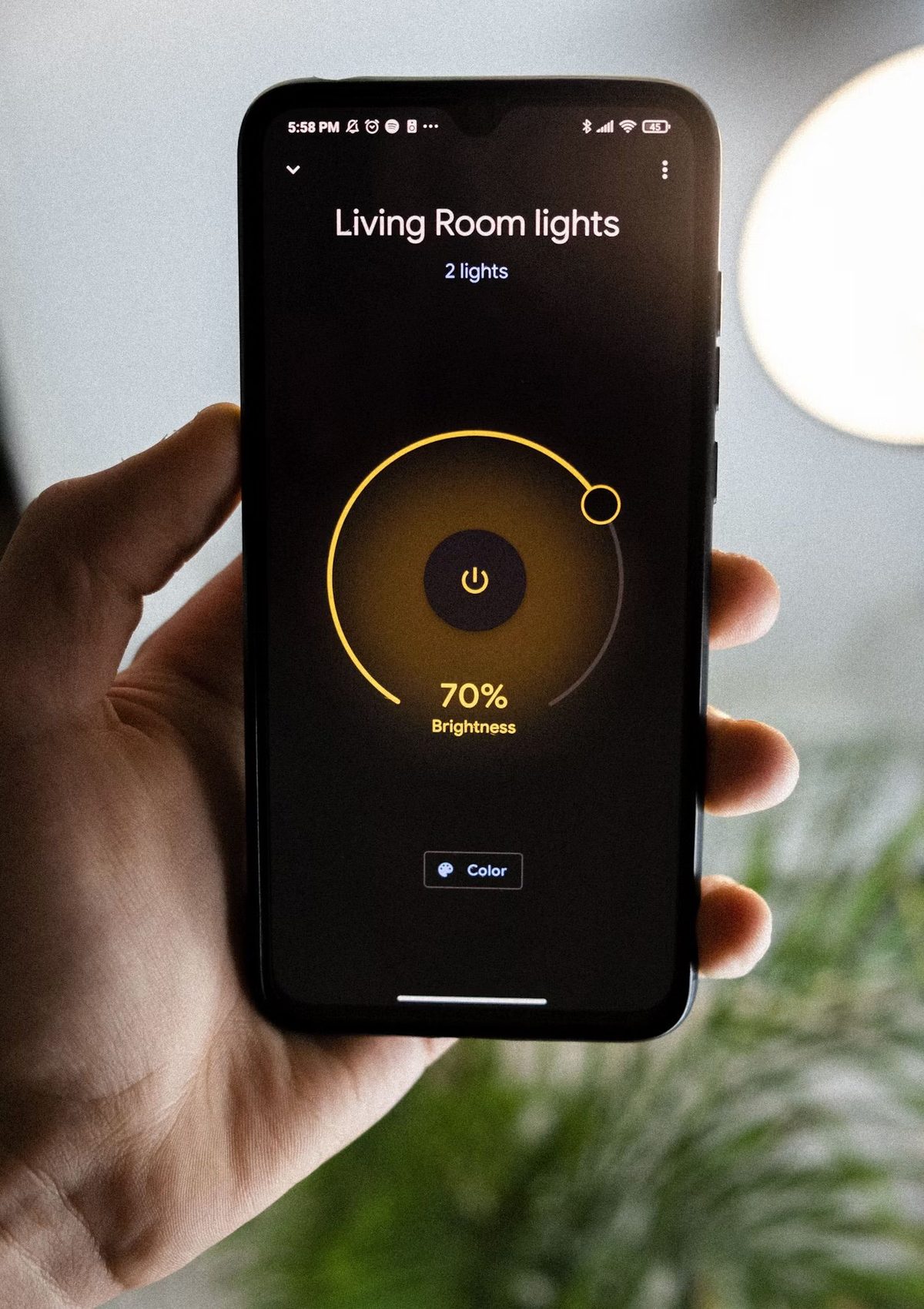
I don't usually get excited about a version number for a networking standard. But Matter 1.6 landed last month, and for the first time in three years of buying, cursing at, and quietly rehoming smart home gadgets, an update has gone straight for the two things that actually made me hate this hobby. So this is my honest, slightly-too-invested reaction — not a review of hardware I've lived with for a month, but a hot take on why this particular release matters more than the ones before it.
If you've never fought with a smart home, the whole thing sounds like a solved problem. You buy a bulb, you put it in a socket, it works. Anyone who's actually done it knows the truth is a lot uglier: a different app for every brand, a pairing dance that fails on the third attempt for no reason, and a low-grade cold war between Apple, Amazon and Google over which of them gets to "own" the plug you just bought. Matter was supposed to end all that back in 2022. It mostly didn't. Version 1.6 is the first release that reads like the people writing it have felt the same frustration I have.
The two problems that made me nearly give up
I've had somewhere around fourteen smart home devices pass through this house, and I wrote up the survivors in the only three gadgets I'd actually defend buying. What killed most of the rest wasn't the hardware — it was the setup and the politics. Setup, because pairing a device is still weirdly fragile: hold a button for exactly the right number of seconds, scan a code that's printed on the part now bolted to the ceiling, hope the phone and the gadget find each other on the right band of Wi-Fi. Politics, because once a device is paired to one ecosystem, prising it loose to work properly with another often means a full factory reset and starting the whole ordeal again.
Those two frictions are exactly what Matter 1.6 goes after, and that's why it caught my attention when a dozen other spec bumps didn't. It doesn't add a flashy new gadget category. It fixes the plumbing — the invisible layer under everything I've tested for the smart home, and the layer that decides whether a gadget becomes part of your life or part of the drawer.
NFC pairing: the small thing that could change everything
The headline feature for me is NFC commissioning. Instead of hunting for a tiny QR code and babysitting a button, you can begin pairing by tapping your phone against the device — and, cleverly, it's designed to work before the device even has power. That last detail sounds like a footnote until you remember every in-wall switch and hardwired sensor you've tried to set up while balanced on a stepladder, phone in your teeth, trying to photograph a code you can no longer reach.
If it works as described, it drags smart home setup toward the "tap and go" experience we already take for granted with contactless payments. I'm cautious — "tap to pair" has been promised before and delivered unevenly — but the direction is exactly right. The moment of purchase is where most people either fall in love with a device or shove it in the drawer, and setup is where that moment is won or lost.
"For three years the smart home pitch has been 'it just works.' Matter 1.6 is the first update that seems to understand it mostly didn't — and to aim straight at the reasons why."
Joint Fabric: an end to the ecosystem cold war?
The feature I keep turning over in my head is Joint Fabric. In plain terms, it lets more than one ecosystem share the same device on a common network — so a single bulb can genuinely answer to Apple Home, Alexa and Google Home at once, instead of being a hostage of whichever app set it up first. If you've ever kept an Echo in one room and a HomePod in another purely because half your gear won't cross the streams, you'll understand why this feels like a big deal.
This is the closest the standard has come to the original promise — buy the thing you like, use it with whatever assistant you like, don't think about brands. It's also the feature I'm most wary of overselling, because a spec is only ever a permission slip. Whether Apple, Amazon and Google actually implement Joint Fabric generously, and whether device makers ship it to hardware you already own, is a separate fight that history says moves slowly. Until it's genuinely everywhere, most households still end up picking one ecosystem to actually run the routines — I put Amazon Alexa and Google Home through the same away-from-home test to see which one I'd trust with the locks in Google Home vs Amazon Alexa: which one I actually trust to watch my house. It's also worth watching alongside Apple's own leaked smart home hardware roadmap — a company that's finally shipping cameras and displays of its own has a real incentive to keep that cooperation genuine, not just on paper. The playbook I set out in the smart home starter kit guide — buy for the chore, not the badge — still holds. But for the first time, the badge might genuinely stop mattering.
Why this is a reaction, not a verdict
I want to be straight about what this piece is. I haven't lived with Matter 1.6 across a wall of devices for thirty days, the way I did before I could tell you a smart thermostat was worth the hassle. A standard rolling out is not the same as a standard working in your hallway. Firmware has to ship, apps have to update, and the three big platforms have to actually cooperate — and "on paper" and "in my house" have been very different places every single time before.
So treat this as informed optimism. What's changed isn't my sofa; it's the direction of travel. For years each Matter update felt like it was adding capabilities nobody was asking for while ignoring the daily papercuts. This one reads like a bug-fix release for the entire category's reputation, and that's a meaningfully different thing to be excited about.
It's not the only smart home news worth reacting to this year, either — Amazon just made Alexa+ a permanent free Prime perk, which is a completely separate upgrade solving a completely separate problem: Matter is about devices cooperating across ecosystems, Alexa+ is about the assistant inside one of them getting genuinely smarter to talk to.
My honest take: Matter 1.6 is the first version I'd tell a frustrated friend to actually care about — not because it does something new and shiny, but because it targets setup and cross-ecosystem sharing, the two frictions that make people quit. It won't fix your smart home overnight, and it lives or dies on manufacturer support. But as a statement of intent, it's the most encouraging thing to happen to this hobby in three years.
What I'll be watching next
Three things will tell me whether the promise survives contact with reality. First, how many devices I already own get NFC pairing and Joint Fabric through an update, versus how many quietly stay on the old way. Second, whether the big three platforms implement sharing in good faith or hobble it just enough to keep you inside their walls. And third — the only test that ever really counts here — whether setting up my next device is genuinely less annoying than the last one. That's the whole ballgame. If it is, I'll happily eat my usual scepticism and write the thirty-day version.
Until then, I'm doing what I always do: not buying anything I don't need, and letting the standard prove itself in other people's houses first. If you want the honest follow-up when I've actually put it through its paces — and the rest of what earns a place in my week — join the Brite newsletter. No hype, just what held up.
Questions people actually ask
What is Matter 1.6 and when was it released?
Matter 1.6 is the latest version of the cross-brand smart home standard, released in June 2026. Unlike earlier updates it adds no new device categories — instead it targets the two things that have quietly ruined smart home ownership since Matter launched in 2022: painful device setup and the way rival ecosystems trip over each other when they try to control the same hardware. It introduces NFC commissioning, so you can start pairing a device by tapping your phone to it even before it has power, and Joint Fabric, which lets Apple Home, Amazon Alexa and Google Home genuinely share the same device.
Does Matter mean Alexa, Google Home and Apple Home finally work together?
That's the promise, and Joint Fabric in Matter 1.6 is the clearest step toward it yet — a shared network where one bulb or plug can belong to several ecosystems at once rather than being locked to whichever app set it up. In practice it will only be as good as the manufacturers and platforms that implement it, and that always lags the spec. I'd treat it as a real reason for optimism, not a switch that flips overnight.
Do I need to buy new devices to use Matter 1.6?
Not necessarily. Because 1.6 is mostly about setup and coordination rather than new hardware categories, a lot of the benefit can arrive through firmware and app updates to devices you already own — assuming the maker bothers to ship them. The honest catch is that support is uneven: some brands update promptly, others treat last year's gadget as finished. Check whether your existing kit is getting Matter 1.6 features before you assume it will.
Is Matter worth waiting for, or should I buy smart home gear now?
Don't put your life on hold for a spec version. If you need a device now, buy the one that solves a real chore and check it lists Matter support. What 1.6 changes is the calculus for anyone who's been burned by lock-in: it's finally reasonable to expect a device you buy today to still cooperate with a different ecosystem tomorrow. Buy for the job first, and treat broad Matter support as the tiebreaker. A better standard still won't make a device worth owning, mind: what a smart lock actually fixed for me and why I switched most of my automations back off both taught me that the hard way.